

Magazine
NEW
PeopleThe work of the seat pad design department: translating the ideal seating comfort into a tangible form.
NEW
PeopleThe work of the seat pad design department: translating the ideal seating comfort into a tangible form.
The only part of a car that a person constantly entrusts their body to is the "seat." Archem, we develop and manufacture "seat pads," which are fundamental to the comfort of that seat. This time, we'll take a closer look at the work of the "Seat Pad Design Department," which translates the "ideal" envisioned by automobile manufacturers into a "tangible form" on the manufacturing floor.
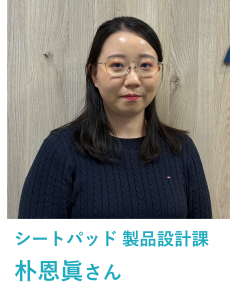
| Translating the "ideal seating comfort" into "product specifications"
—First of all, what role does the Seat Design Department play?
In short, our job is to translate the "ideal seating comfort" envisioned by automobile manufacturers into "product specifications" that can be mass-produced in factories.
A project starts with a customer's request for "this kind of design and this kind of seating comfort," but when we try to give it shape as it is, we face physical barriers such as the inability to mold urethane or lack of strength.
That's where we come in. First, we evaluate the ride comfort based on the data we receive from the customer, and then we translate that into specific "physical property characteristics." Then, we engage in discussions with the customer and the evaluation team to determine the optimal "physical property values."
At the same time, we conduct thorough technical verification with a view to mass production processes. We repeatedly review the design, addressing issues such as, "This shape carries the risk of poor quality due to difficulties in reproducing the shape accurately," or "Changing the thickness here can solve the problem." Our role is to act as a hub for all stakeholders—material development, material and mold manufacturers, and the manufacturing site—and to derive the "optimal solution" for the product.
—So, there are a wide range of people involved.
Yes. When I first joined the company, I was overwhelmed by the sheer number of people involved, and I was completely lost, not even knowing "who to consult, when, or what to ask." There were times when I was caught between the customer's ideals and the constraints of actual manufacturing, and all I could do was act as a messenger, relaying opinions from both sides.
However, through my experience with numerous projects, I realized something: good products cannot be created if the designer is merely a coordinator. What's important is having the professional expertise to foresee risks and then propose feasible alternatives.
I still remember the sense of accomplishment I felt when the product, which we had painstakingly brought together by bringing together the opinions and interests of all stakeholders, first rolled down the production line, and when I saw the new car with that seat installed driving around town.
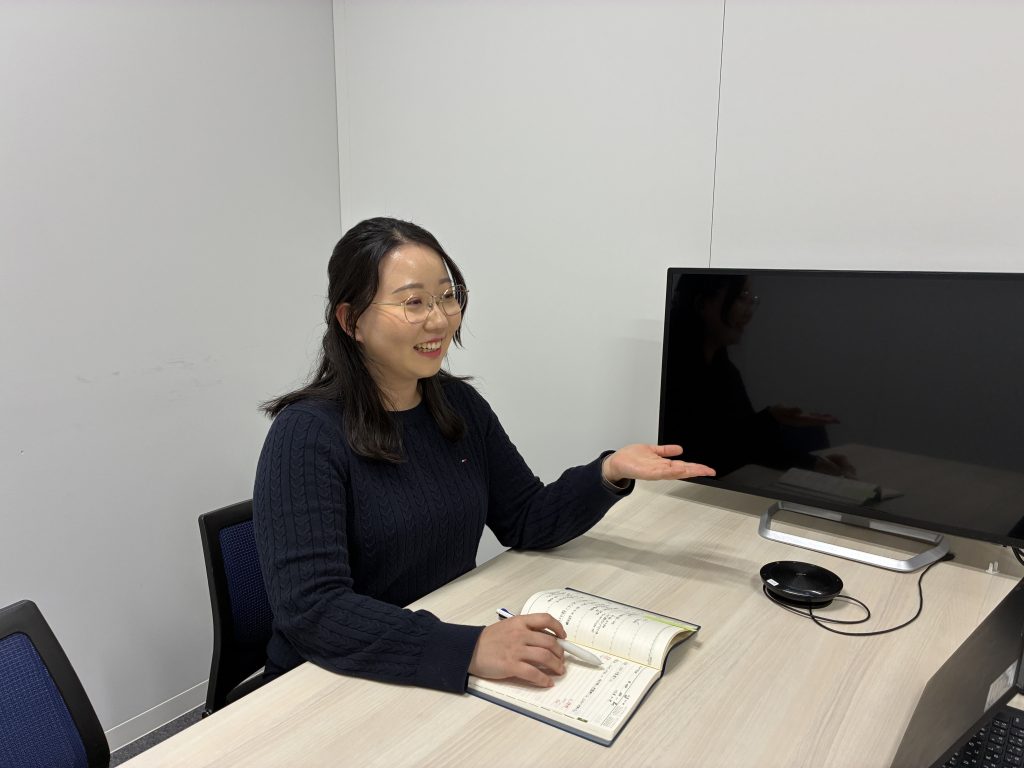
| Trust the "real thing" rather than a "perfect score on the data"
—What is something you value most when you're working, Ms. Park?
Our company-wide culture emphasizes "actual work, actual products." We believe this is the shortest path to improving design quality. Recently, simulation technology has advanced, and it's easy to think that a lot can be completed on a PC screen. However, even if the data shows perfect values, it's not uncommon for unexpected behavior to occur when urethane is actually injected into the mold.
—So, you can't judge everything based on data alone, can you?
Yes, polyurethane is very delicate. Even a one-degree change in factory temperature, or a slight increase in humidity on any given day, can subtly alter how it foams.
That's why, rather than agonizing over something in front of a screen for hours, I don't hesitate to go to the site. I see the molds with my own eyes, feel the urethane with my own hands, and listen to the voices of the operators on site. I believe that the essential solution can only be found by being exposed to "primary information" that can only be obtained there.
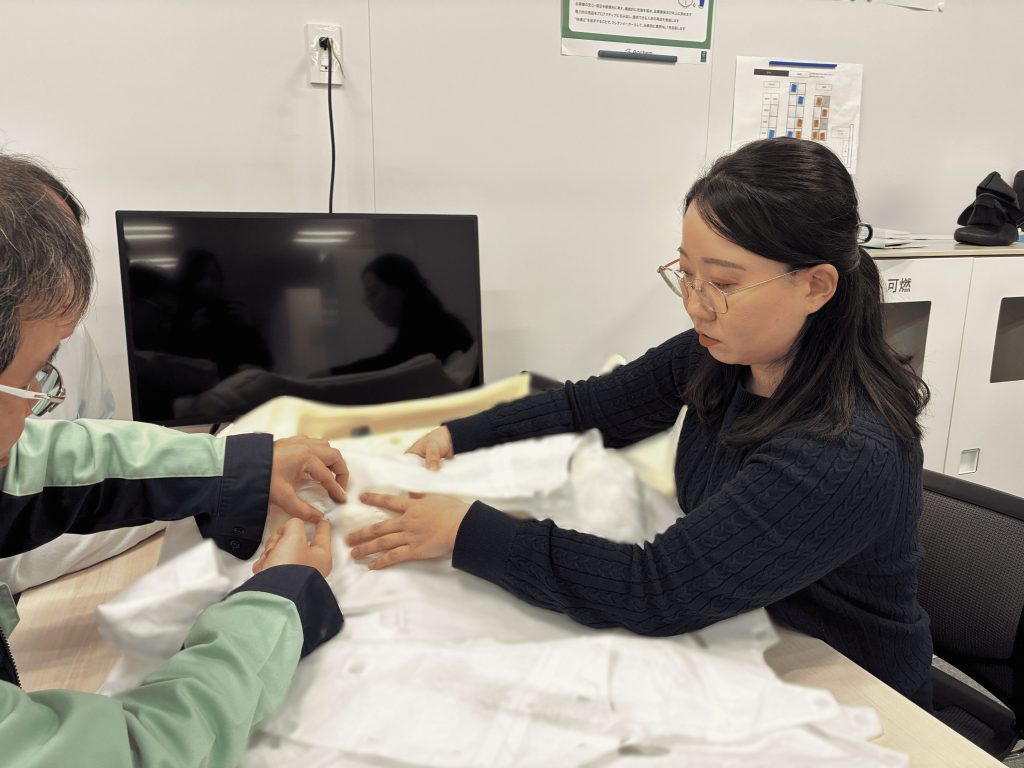
| Design that only Archem can deliver: "Taking responsibility to the very end"
—I understand that you often visit clients in person.
Yes. Even if we create a sample that we believe is "perfect" within our company, when we actually install it in a customer's vehicle, there may be slight gaps or the hold may be slightly different from what was expected.
Even in such situations, instead of settling things with data exchanges, we go directly to the customer. We sit down with the customer, face-to-face, and discuss "what requirements are not being met" and "how improvements can be made to get closer to the ideal." This is because we cannot take the next step with confidence unless we see it with our own eyes.
―I heard that you were also a designer in your previous job, but is this "on-site/real-thing" style unique to Archem?
That's right. Generally, in large organizations, there is a lot of division of labor, and I used to be in a position where "my job was to draw the blueprints," and I left the subsequent mass production preparations to other departments.
However, the scope of work for Archem 's design department is extremely broad. They are responsible for everything from drawing blueprints to prototypes, through the mass production line, and up to the moment the product is released to the world.
Seeing how something I designed ultimately reaches the customer—the entire process—is a great source of satisfaction for an engineer. This isn't limited to the design department; everyone involved in mass production visits the customer in person to complete the project from start to finish. Sharing the challenges with many stakeholders and deepening bonds both inside and outside the company during the process of creating a single product brings me great joy.
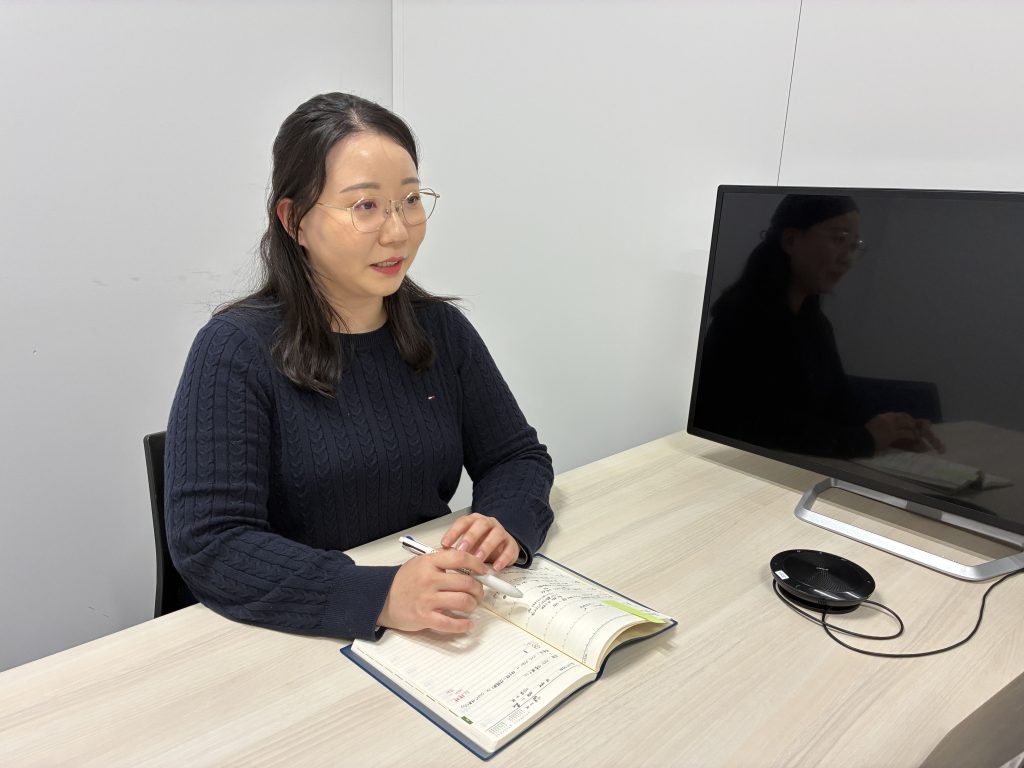
| The challenges of the EV era: The challenge of "thin and comfortable"
—The automotive industry is currently undergoing a major transformation with the rise of EVs (electric vehicles) and autonomous driving. How will this affect design?
I feel like we are right in the middle of a major transformation. Especially with EVs, it is necessary to mount large batteries under the floor in order to extend the driving range. As a result, in order to make the limited interior space as large as possible, the design of the entire vehicle has come to require "extreme thinning" of the seats.
Of course, the excuse that "the seating comfort has been compromised because it's thinner" is unacceptable. We must maintain comfort that prevents bottoming out even with a thinner seat, ensuring fatigue even during long drives, and guaranteeing safety in the event of a collision. Achieving a balance between these seemingly contradictory elements within the constraint of the "thinness" demanded by our customers, using our technology, is a significant challenge for us.
In response to this challenge, our materials development team and I are working together to achieve it by adopting unprecedentedly high-elasticity materials and controlling physical properties through innovative back-surface structures. We are overcoming each difficult challenge one by one, and we now have a strong sense that we are creating value for future cars from the perspective of seats.
| With pride, we bring comfort to every situation around the world.
—Finally, could you tell us about your future plans?
The seat pads are invisible to everyone once the car is finished. It's unlikely that the customer who purchases the car will even be aware that "the urethane in these seats is made by Archem."
But I think that's fine. If, after a long drive, the driver and passengers arrive at their destination without feeling tired, then there is always meticulous calculation and dedication on the ground that goes into it. The thickness and shape of seats may change, but as long as people are in cars, seats will never disappear.
"We are the ones who are protecting the driver's back the closest."
With that pride in mind, I want to actively take on new challenges not only domestically but also by supporting overseas bases and collaborating with new manufacturers. My challenge going forward is to spread Archem 's core expertise in "grasping reality" to seats around the world, delivering the invisible "ultimate comfort" at every moment of travel.