

Magazine
NEW
Sustainability[Development Story] Eco-friendly yet comfortable to use. The path to creating the "Sustainable Sponge"
NEW
Sustainability[Development Story] Eco-friendly yet comfortable to use. The path to creating the "Sustainable Sponge"
"Environmentally friendly products often mean sacrificing a little comfort." We challenged this common assumption.
Our goal was to create a sustainability that everyone can easily maintain. Using coconut-derived materials while maintaining the same lathering ability and durability as conventional sponges, Archem 's "Sustainable Sponge" is proof of our challenge to balance environmental considerations with comfortable usability.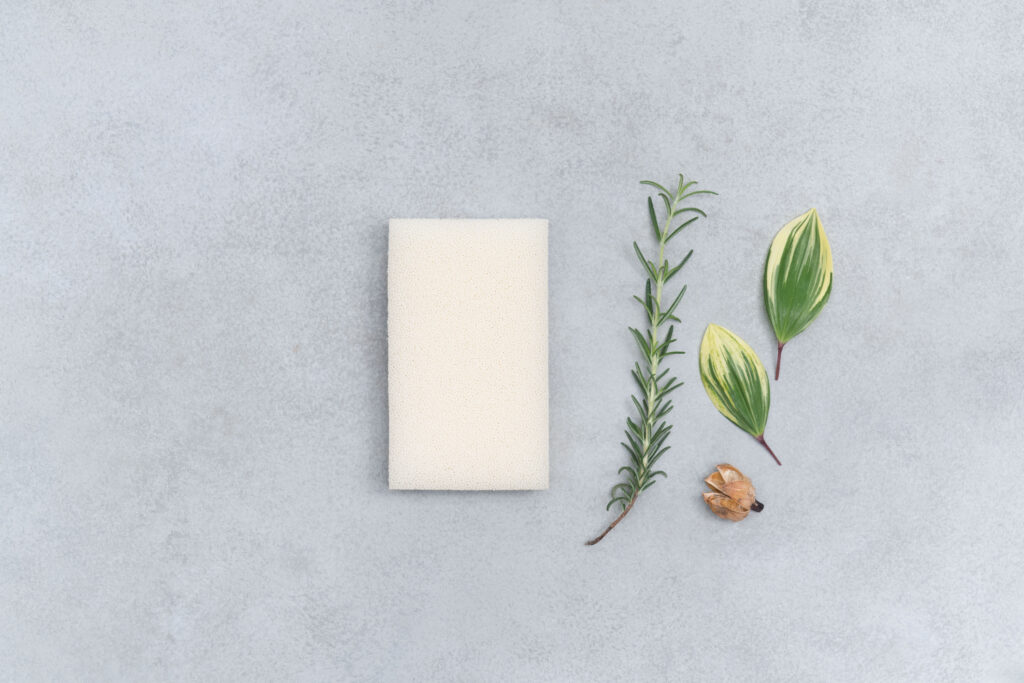
However, the challenge was by no means an easy one. This project, launched as the company's most important task, had a deadline of only "six months." It was a no-brainer decision to maximize the team's energy in a short, intensive period and deliver the best possible output at the speed the market demanded.
With the deadline looming, a project team united across departmental boundaries. How did they manage to balance "environmental consideration" with "comfortable usability"? We delve into the behind-the-scenes story of their development.
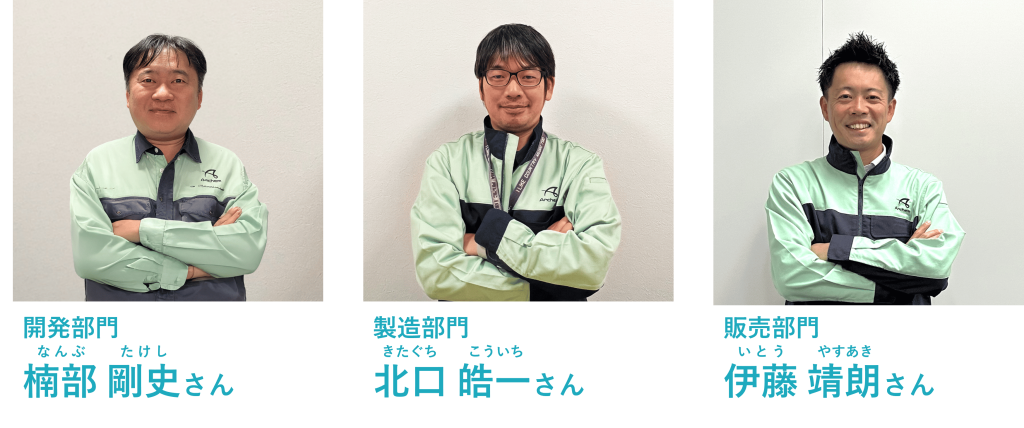
| Our goal was to create a product that would become the "face" of our company.
—I understand that the project was initiated by the establishment of the new company, "Archem."
Kitaguchi: Yes. That's why we didn't want it to end up being just another product in our lineup. We wanted to make it a product that symbolizes us, something that people would immediately think of as "Archem" when they think of this sponge. That was a shared understanding among all the project members.
Ito: That said, we are a company that has primarily focused on B2B (business-to-business) transactions. The fact that none of our members had experience in B2C (business-to-consumer) product development was a major challenge this time. Unlike B2B, where there are clear requests and specifications from client companies, B2C requires us to set our own targets and proceed while uncovering latent needs. The way of thinking is fundamentally different.
Furthermore, this time there was a clear deadline: the start date of sales. Even so, the challenge was to create a product that could reliably meet that latent need. The path, marked by a constant stream of decisions made at breakneck speed with no time for hesitation, proved to be far tougher than anticipated.
—I heard that project-related meetings were held quite frequently.
Kusube: We didn't have time to hesitate. Whenever something came up, we'd get together immediately and share the challenges we were each facing. Then we'd take the ideas that came up and try them out right away. We were constantly in that cycle. In particular, when it came to uncovering "latent needs," as Ito mentioned, we struggled to reach a conclusion that everyone could agree on just by talking amongst ourselves.
Kitaguchi: So we went back to basics and decided to thoroughly listen to the voices of the users. In addition to market research, we conducted a monitor survey of over 100 people within the company, gathering unbiased "real voices" including those of employees' families, and used them as a guide for development.
"Sustainability" and "Functionality": The Barrier to Reconciling Them
—So that's where the theme of balancing "sustainability" with "comfort," which is our mission, came about.
Kitaguchi: That's right. But that was the first major hurdle. Recreating the same feel as conventional petroleum-based sponges while using environmentally friendly materials. It's easy to say, but it was by no means easy to achieve.
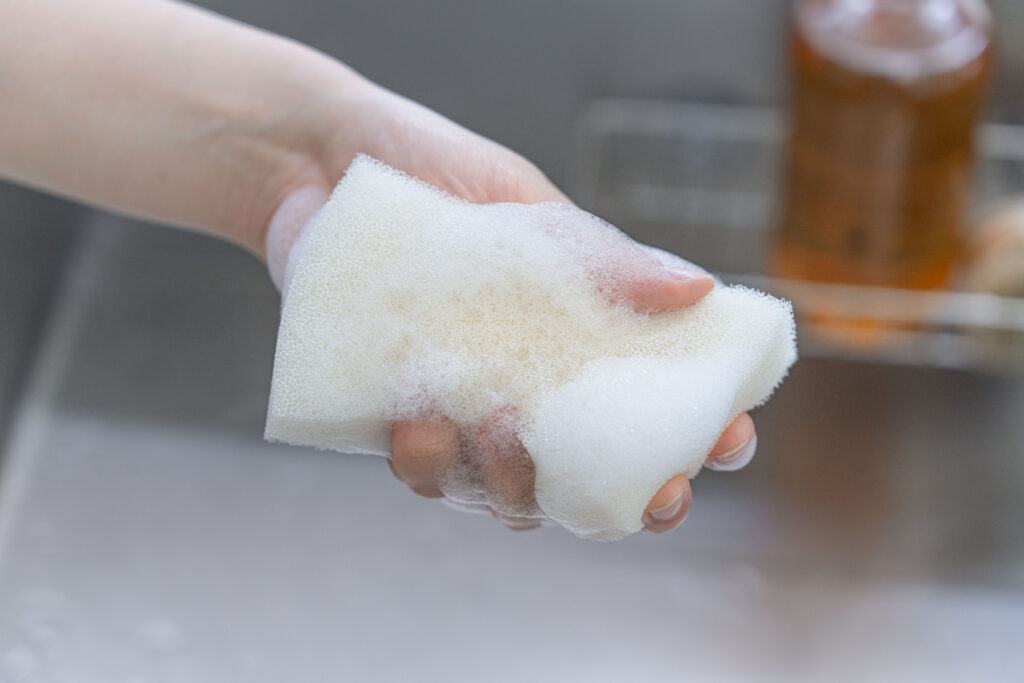
Kusube: Working with coconut-derived raw materials for the first time was more challenging than I imagined. The chemical reactions didn't occur as we expected, and we couldn't achieve consistent quality. It wasn't easy at all. We would make prototypes, fail, and then make more prototypes... For a while, we had days where there was no end in sight.
At that time, I suddenly decided to look through the vast amount of technical data that our company had accumulated over the past 70 years.
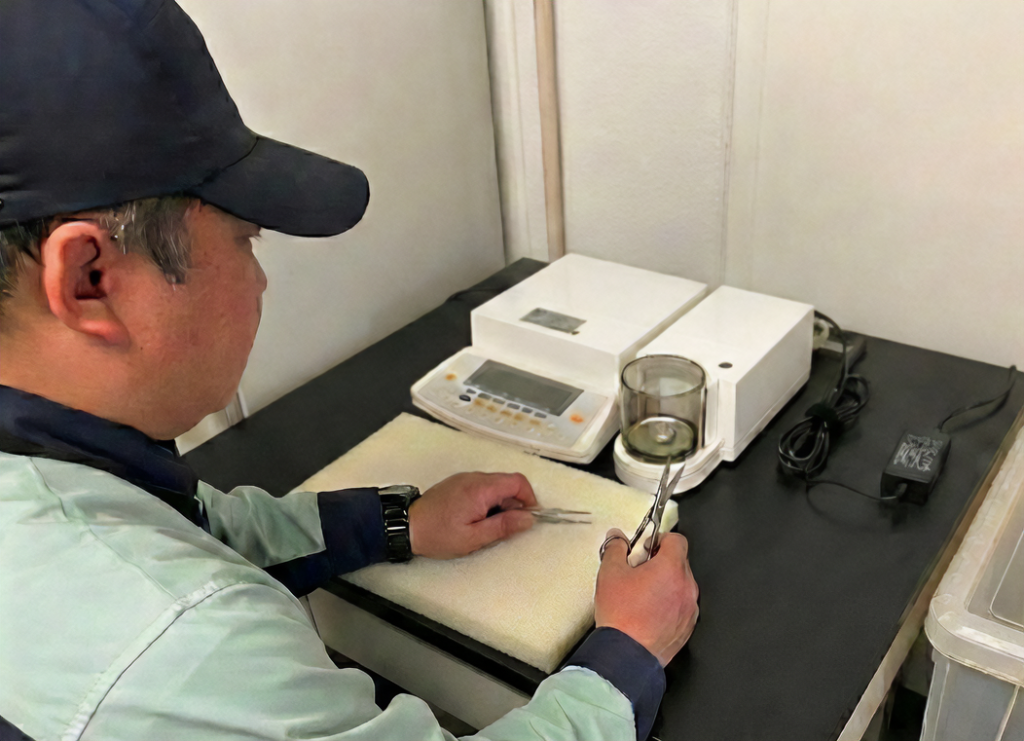
—That's the dedication of a developer.
Kusube: That's right. We referenced the vast amount of data and records that our predecessors had accumulated, and gradually grasped the characteristics of each new raw material. It was painstaking work, but as a result, we were finally able to create the ideal material that combines cleaning power and durability comparable to petroleum-based sponges.
From the research lab to the production line: The power of materials that overturned preconceived notions on the factory floor.
—The completed materials then move to the mass production phase to ensure a stable supply to our customers.
When you first took over from the development department, what were your initial impressions as a manufacturing team?
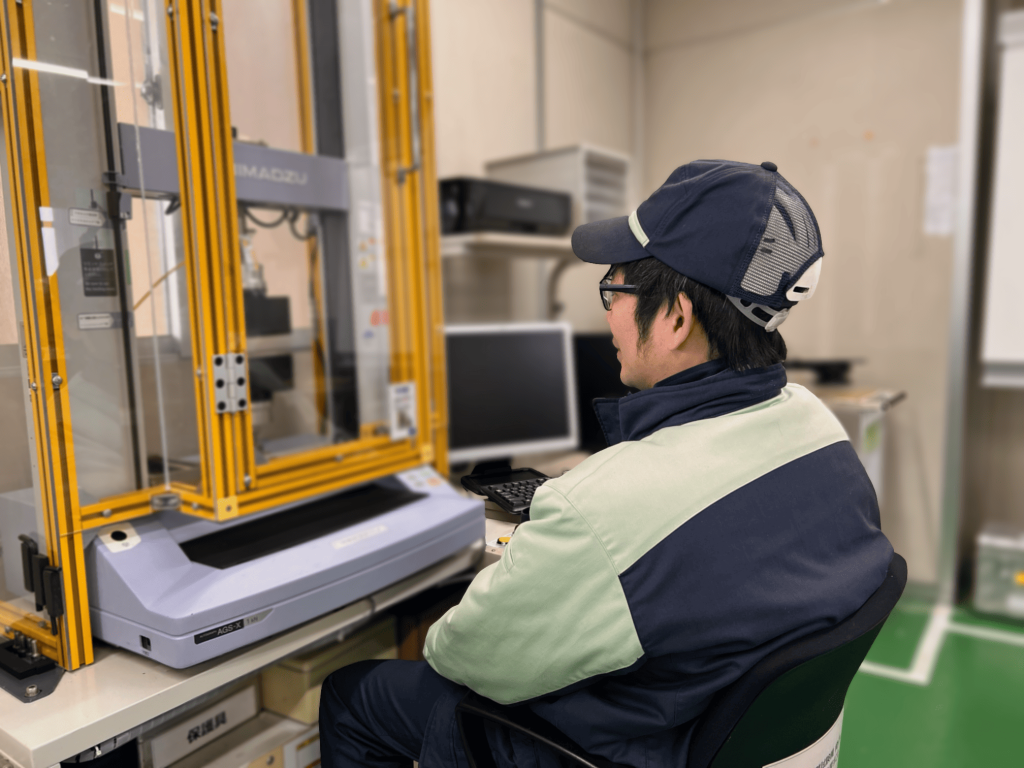
Kitaguchi: To be honest, I was feeling quite anxious. Generally, the term "naturally derived" gives the impression that it might be inferior in terms of strength. Therefore, with this product, I had many concerns, such as "Will it be possible to cut it without problems using conventional processing methods?", "Will there be a lot of waste during processing?", and "Will we need to significantly revise the processing conditions?". I was prepared for it to be quite difficult to establish the processing conditions.
—What were your impressions after actually holding the prototype in your hands?
Kitaguchi: My impression changed completely. The moment I first touched it, I felt a strong sense that "this could be mass-produced under the same processing conditions as regular urethane." After that, we conducted various condition checks and tests, and we were able to prove that it has the same strength as regular urethane and that stable production is possible without changing the processing conditions. I believe that we were able to achieve this level of performance because Mr. Kusube went through a lot of trial and error and carefully crafted the material design.
| To deliver not just "specifications," but "feelings"
—I understand you faced some difficulties in sales after the product was completed.
Ito: Yes. From product names and packaging to shipping methods, there were a ton of challenges unique to B2C. What I learned most from this was the importance of paying attention to how to "present" and express the product.
For example, we initially described the sturdiness of our sponges using the word "durability." While not wrong, it sounded a bit cold and lacked the warmth we wanted to convey to our customers. So we changed the expression to "tough and long-lasting." This experience taught us that even something as simple as word choice requires careful consideration to effectively communicate the appeal of our products to our customers.

Kusube: In terms of "presentation," we discussed the packaging as well, imagining how it would look when it reaches the customer. We were very particular about balancing productivity and aesthetic appeal when selecting the packaging and designing its size.
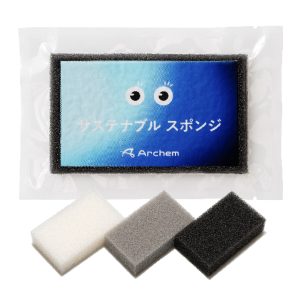
▲ "Sustainable Sponge" Compressed Type Package
—So, in order to deliver it to the customer, you need to pay attention to every detail, right?
Ito: That's right. How to connect with our customers. The perspective of "how to present" our products in a way that makes them think, "I want this," has been a valuable experience for us.
| Delivering everyday comfort through the power of materials
—Finally, please tell us about the thoughts and feelings you put into this product.
Ito: The vast amount of technology and experience we've accumulated within the company over many years can be transformed into "peace of mind," "joy," and "comfort" that support our customers' daily lives, simply by changing our perspective. Now that we've gained that conviction, we believe that limitless possibilities lie ahead for us.
Kusube: I feel that the lessons I learned from this project have become a great asset in order to turn that "potential" into reality. I would like to use this as a springboard to take on further "new challenges," such as expanding into other businesses or developing unknown new materials.
Kitaguchi: And we want to expand this product not only to general consumers but also to B2B in the future. That's because this product is a finished product, but it's also a "raw material" for creating something new. We look forward to a future where new value is co-created starting with this product.
Development, manufacturing, and sales. Professionals in each field have overcome numerous obstacles and passed the baton. The "Sustainable Sponge," the culmination of their efforts, continues to support the "comfort" of someone's life today. And that baton, passed on, will lead to the next product, and even to the creation of new businesses.
■Sales destination
• Uncompressed type Amazon: https://amzn.asia/d/2h9fDaz
Rakuten: https://item.rakuten.co.jp/bskaimin/sustainable_sponge/
• Compressed type Amazon: https://amzn.asia/d/5laZb1k
Rakuten: https://item.rakuten.co.jp/bskaimin/sustainable_sponge_c/