

Magazine
NEW
Global1.5 times more efficient production! Thailand base achieves transformation into an "autonomous organization"
NEW
Global1.5 times more efficient production! Thailand base achieves transformation into an "autonomous organization"
In the manufacturing environment, where continuous improvement is essential, one overseas base has undergone significant progress. This is Archem (Thailand) Company Limited, one of Archem 's overseas group companies. Over the course of one year, from 2024 to 2025, ACT thoroughly improved the "quality" of its manufacturing processes. By strengthening quality control, they achieved a 1.5-fold increase in production efficiency.
How did ACT evolve into an organization that "thinks for itself and improves"? Behind this transformation lay thorough "dialogue" and a chain of small successes.
| The "wall of consciousness" that stood in our way
—What challenges did the team face initially?
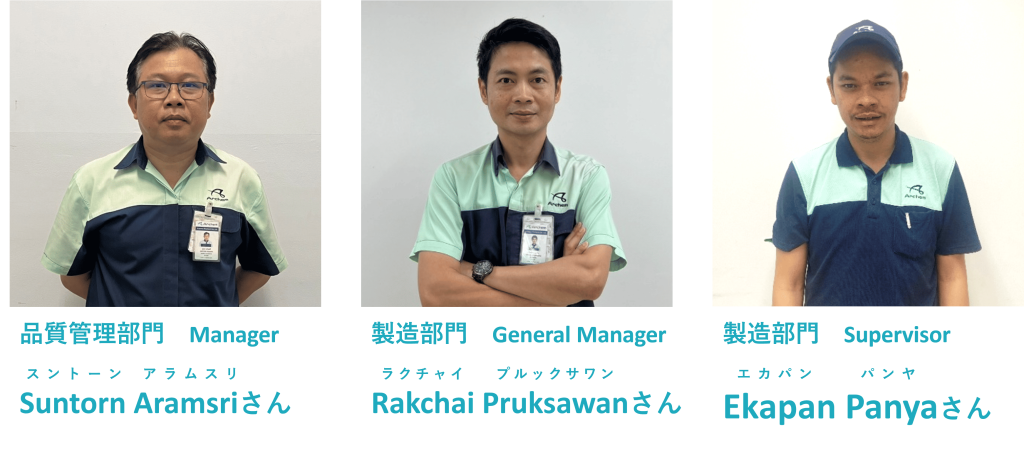
Sunton: Initially, there was an atmosphere on the ground that emphasized easily measurable results, such as "quantity." While employees steadily carried out their assigned tasks, they lacked a sufficient "autonomous improvement mindset" to change the status quo and improve productivity and quality on their own. However, in order to consistently deliver higher quality products to our customers, we needed to fundamentally change this situation.
-I don't think it was easy to change the attitude of the field.
Sunton: That's right. Simply issuing the order to "increase production efficiency" won't change the habits on the factory floor. They may understand it intellectually, but their hearts won't be moved.
That's why, first and foremost, I wanted everyone to have a strong sense of pride in their work. I wanted to change the monotonous routine of simply going through the motions and share the feeling that "we are creating something wonderful." With that in mind, I embarked on the reforms.
| Addressing inefficiencies on the ground through "dialogue"
-What specific approaches did you take to reform?
Lakchai: First, we made sure to listen to the "voices" from the factory floor about the factors hindering production. There is always a reason why production efficiency is not improving. We needed to uncover the "root cause" that only the operators on the factory floor know intuitively, such as "the procedure is complicated and prone to errors" or "the equipment has quirks and requires a knack to use."
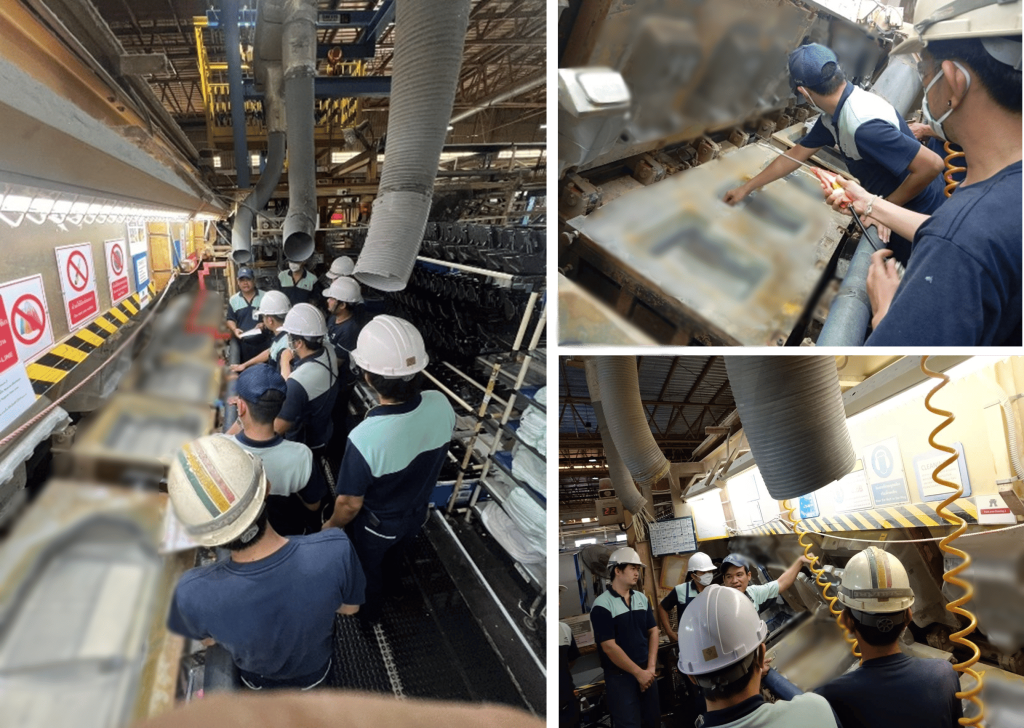
Ekapan: However, at first, there was a sense of pride among those on site, saying, "This is how we've always done it," and also bewilderment at the change. There were also complaints that were beyond their control, such as, "It's the limit of the machine's performance," or "It's because the equipment is outdated."
So we managers went into the field and repeatedly told them, "Blaming the equipment won't get us anywhere. Let's start by working together on what we can do right now." Instead of dismissing their ideas outright, we addressed each of their difficulties one by one. By doing so, they developed a sense of trust that "their voices can improve the workplace," and gradually their complaints transformed into constructive suggestions.
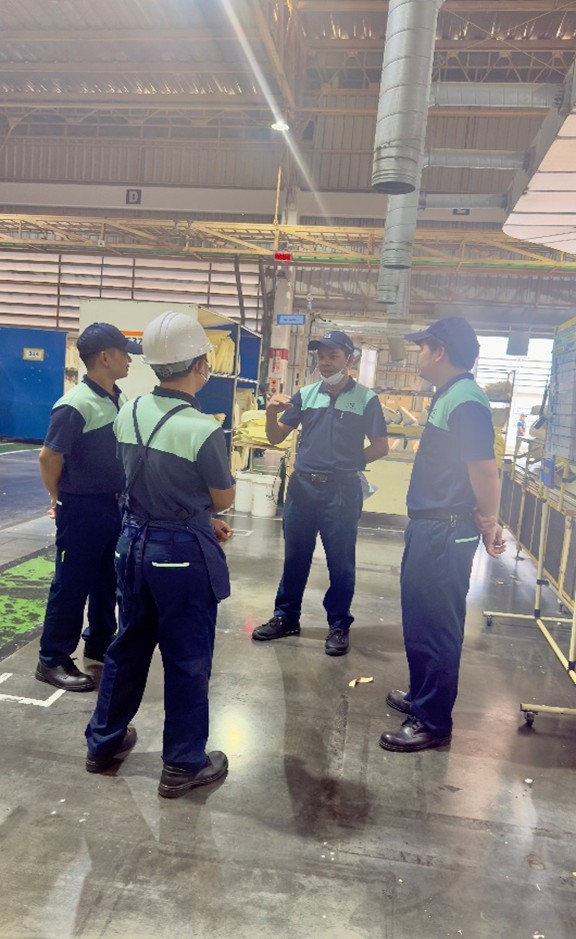
Lakchai: In building trust, what we considered especially important was how we handled "when problems occurred." Whenever a problem arose, we would always go to the site and sit down and talk face-to-face. We would discuss things like, "How is this problem causing inconvenience to the customer?", "What positive impact will preventing this problem have on the on-site staff?", and "How could this problem have been prevented?"
Instead of simply scolding or giving instructions, we thoroughly discussed these issues until everyone understood and agreed. I believe that it was only when we reached a conclusion that everyone could truly accept—that "improving quality is the best way to increase efficiency"—that the behavior on the ground began to change.
-Has anything changed from the opinions from the field?
Ekapan: What was impressive was that the suggestion to reduce the number of people in charge of a certain process from five to four came from one of the operators themselves.
Normally, the workplace would request additional staff to reduce the workload, but they reviewed their workflow themselves and analyzed that "if we eliminate each other's waiting times, four people will be able to coordinate more smoothly and increase production efficiency." When we immediately conducted a test run, not only did production efficiency increase, but the team's cohesion also became stronger.
| The field staff come up with the ideas, and management provides the support.
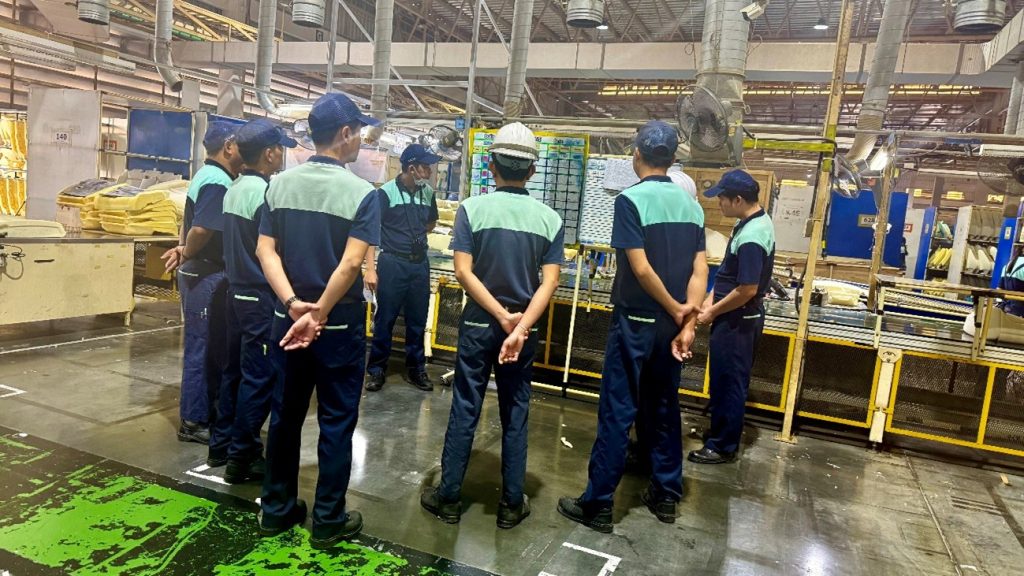
Lakchai: What supports these changes is our daily "PDCA meeting." Everyone, regardless of their position, discusses on an equal footing and decides to "do it right away." The next day, we share the results, and if the improvements are effective, we all praise each other with "Well done!" Recognizing even small successes together motivates us to make further improvements.
Of course, we don't leave everything to the people on the ground. When the situation cannot be resolved through on-site efforts alone, we in management take responsibility and step in to help. We use measures that only managers can take, such as modifying molds or changing the work process itself, to eliminate bottlenecks.
Sunton: Another important factor was cross-departmental collaboration. Our quality control department, Rakchai's manufacturing department, and the on-site managers like Ekapan constantly collaborated, meticulously monitoring data such as "how is the rate of in-process losses changing?" and "are the effects of the measures reflected in the numbers?" I believe that because everyone was able to discuss things from the same perspective based on objective data, rather than just intuition, we were able to proceed with the right improvements without hesitation.
| "On-the-ground capabilities" gained beyond mere numbers
—What kind of changes have you seen as a result of your activities?
Lakchai: The biggest achievement is that production efficiency has improved by 1.5 times. The time we previously spent dealing with problems and product losses was an "abnormality" that shouldn't exist. It was also a factor that was putting pressure on the business. This improvement has eliminated that negative and allowed us to rebuild a healthy profit structure, which is a big deal.
Most importantly, the stabilization of our processes has allowed us to confidently deliver "consistent products" to our customers. As a result, we feel that our reputation outside the company has greatly improved, to the point where we now receive awards from customers for our quality.
—What's the atmosphere like on set?
Sunton: I feel that my mindset has shifted from "work I'm told to do" to "work that I take ownership of." Previously, when a problem arose, I tended to think in terms of symptomatic treatment, like "let's just solve the problem that's happening right in front of me for now." But now, the whole team can calmly analyze "where the inefficiency lay in the process" and take measures to prevent it from happening again. I feel that this "teamwork focused on problem-solving" that has been fostered is an asset that is worth more than the 1.5 times increase.
There is no end to quality improvement.
—Now that you've achieved a shift in mindset, what is ACT's next goal?
Sunton: There is no "end" to these improvement activities. We will not be satisfied with the current numbers, but will continue to pursue further efficiency improvements, quality enhancements, and a system that can stably supply them. We also want to spread this "culture of improvement" that we have cultivated on the factory floor to all areas, such as safety and disaster prevention. By raising the level of the entire organization, we would like to give back more tangible value to our customers and society.
Ekapan: To avoid making improvements that are self-serving, we would like to strengthen dialogue with "external" parties going forward. We aim for higher quality from both an "external perspective" of customer needs and an "internal perspective" of the knowledge we have accumulated within the company.
Lakchai: We're seeing results in the numbers, but the important thing is to "establish" them. We need to thoroughly "standardize" things so that we can maintain high production efficiency at all times, regardless of the difficulty level. I'm confident that if we can reach that point, we can become a truly "high-quality, high-efficiency" factory.