

Magazine
NEW
GlobalSafety at Manufacturing Sites: Protecting the "Normal" for Employees through Global Cooperation. Archem's culture of safety in the manufacturing process
NEW
GlobalSafety at Manufacturing Sites: Protecting the "Normal" for Employees through Global Cooperation. Archem's culture of safety in the manufacturing process
Behind the "comfort" that Archem provides are professionals who prioritize the safety of the work site and the peace of mind of the workers. In addition to safety, our company is working to protect employees in a wide range of areas, including disaster prevention, the environment, and crime prevention, but this time we will focus on "safety."
We spoke with Kazuhiko Hori of the Global Safety and Disaster Prevention Management Division, who is responsible for the company's overall global safety strategy, and Minxia Situ, section chief of the Safety, Disaster Prevention and Environment Division, who oversees frontline safety management at the Kaiping Plant in China. These two, who work together across borders, spoke about their beliefs about safety and specific initiatives.
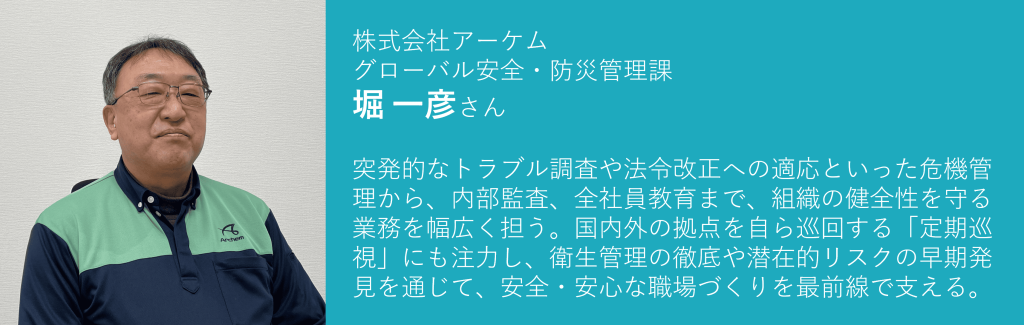
If it's not "live information," it won't have an impact on the field.
-First of all, please tell us about the role of the Global Safety and Disaster Prevention Management Division.
Our greatest mission is to ensure that all employees can work with peace of mind and go home with a smile on their face without any problems. Of course, responding quickly after a problem occurs is important, but what's even more important is "preventing problems from occurring." We focus every day on creating systems to nip risks in the bud as early as possible.
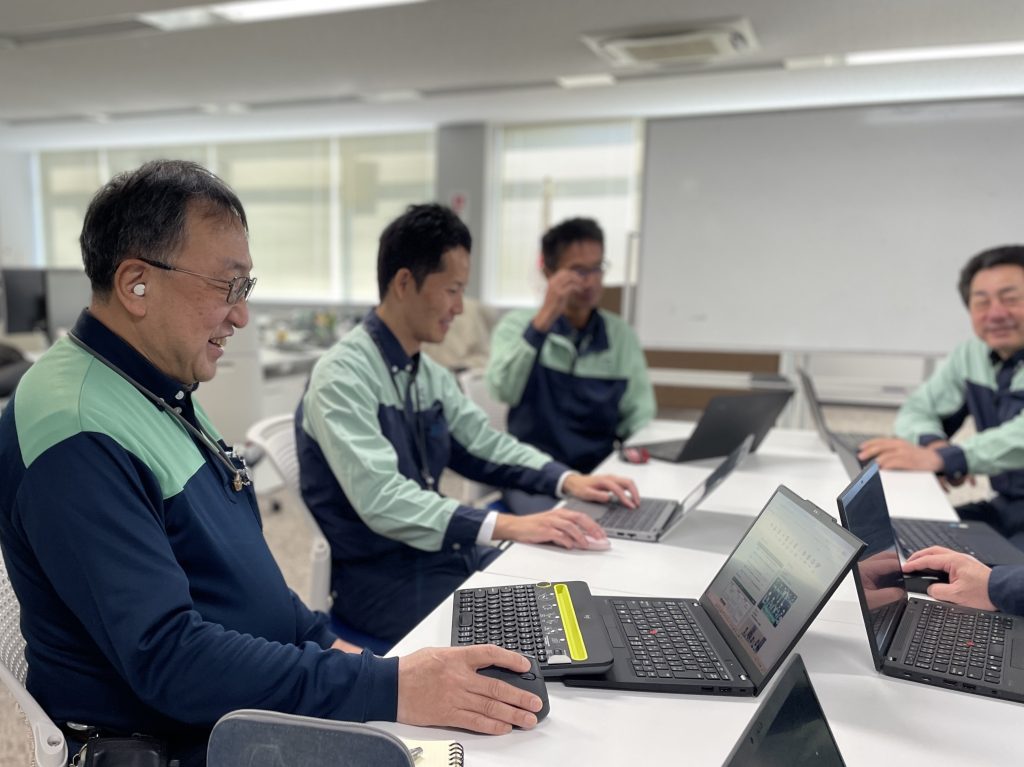
-What do you pay particular attention to when it comes to ensuring safety on-site?
Always provide "live information."
For example, if information about a problem that occurred at one base is simply sent to other bases as impersonal text information, it is difficult for the people on-site to perceive it as something that concerns them personally. When the base changes, the environment, equipment, and even the way of thinking of the people working there are all different.
That's why I make sure to first understand the information deeply myself and break it down to a level where the recipient can think concretely about what kind of situation the same thing could happen in if it were at my base, and how I would deal with it, before I convey it to them.
We believe that only by making people see the problem as something that concerns them personally will they be able to instantly pull out a solution from the back of their mind when a problem does arise right in front of them.
-While I understand that it's important to think of it as something that concerns you personally, it's difficult.
That's right. At first, I too took it for granted that a safe environment existed, and thought that accidents and troubles were something far removed from my world. However, when I was still a new graduate and had just joined the company, there was a major incident at the site where I was undergoing training. That was when I was made to keenly realize that "danger is always nearby."
Fortunately, I have never faced any major problems during my time working here, but that experience has made me realize every day that although these uneventful days may seem normal, they are by no means normal.
Our company has a very high awareness of safety, and we have a well-established system in place to manage and respond to any problems that occur across the company. This is a wonderful thing, but on the flip side, there are many employees who have never experienced a problem, and I feel that there are situations in which it is difficult to maintain a safety awareness.
That's why I strongly believe that we should provide these people with the skills they need to cope in times of emergency.
-Mr. Hori's passion for safety comes from his own original experiences.
With this in mind, Mr. Hori now shared with us in detail the specific initiatives he is undertaking.
One team sharing safety knowledge across borders
Quality Management Administration Site: Timely sharing of safety information
Even if there is physical distance, there are no borders when it comes to safety awareness. We have created an in-house portal called the "Quality Management Administration Site," creating an environment where the same information can be accessed in a timely manner from any base around the world.
This site compiles troubleshooting manuals for each base, as well as materials for our activities. This site has eliminated information gaps between bases, enabling speedy collaboration based on a common understanding and strengthening horizontal ties as "one team."
\User comments/

Site-specific safety and environmental protection meetings: Making it your own through two-way communication
Sharing information through portals tends to be one-way. To compensate for this and to help employees understand it more deeply as something that concerns them personally, we have set up regular communication forums in each region where we have manufacturing bases.
We work together to dig deeper into problems and issues reported by each base, and share countermeasures from other bases. Through this kind of two-way dialogue, we are creating a system in which new insights and practical knowledge are spread throughout the organization.
5-Why Analysis: Eliminate the causes of problems across the company
When trouble occurs, we conduct a thorough "5-why analysis" to dig deep into the cause from multiple angles. We look for causes at various levels, not just from the perspective of on-site personnel, but also from the perspective of the equipment, organizational structure, executives, and even external contractors. The results of this analysis are shared not only with the on-site staff, but also with management. After management themselves grasps all trouble cases, the entire company works to prevent recurrence and eradicate potential risks.
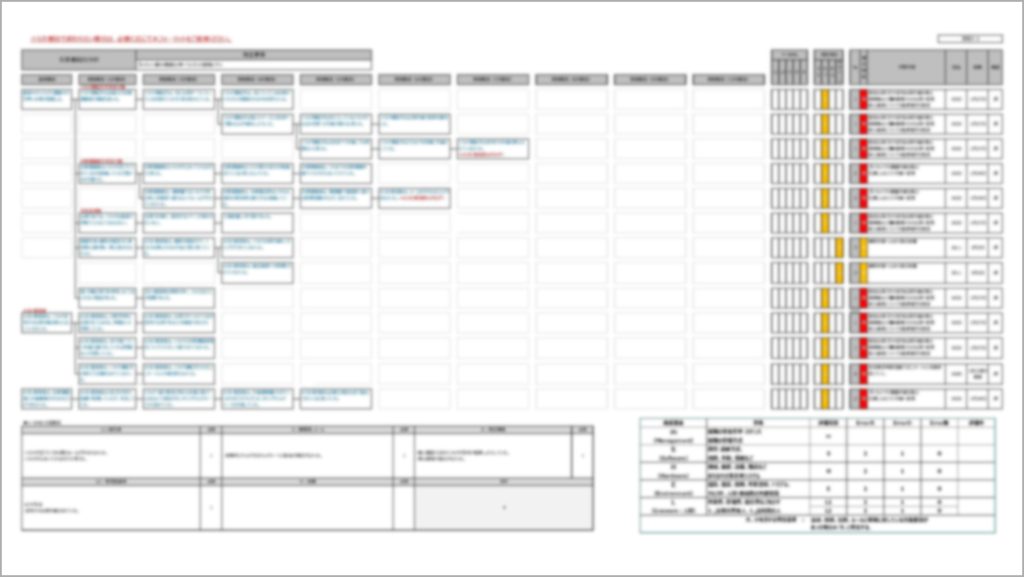
▲"5-Why analysis" digs deep into the causes of problems that occur, hierarchically.
We aim to eliminate potential risks by investigating the causes from multiple perspectives.
The goal is to eliminate risks. We want to foster a culture of awareness.
-We understand that the number of incidents is on the decline thanks to the initiatives you have introduced. What are your prospects for the future?
Yes, we’re pleased to see that the number of incidents has steadily decreased. From now on, we will not only focus on reducing the number of incidents, but also on further improving the quality of each of our countermeasures. We want to go beyond superficial solutions and identify the root causes to create a robust system that will prevent similar incidents from occurring again.
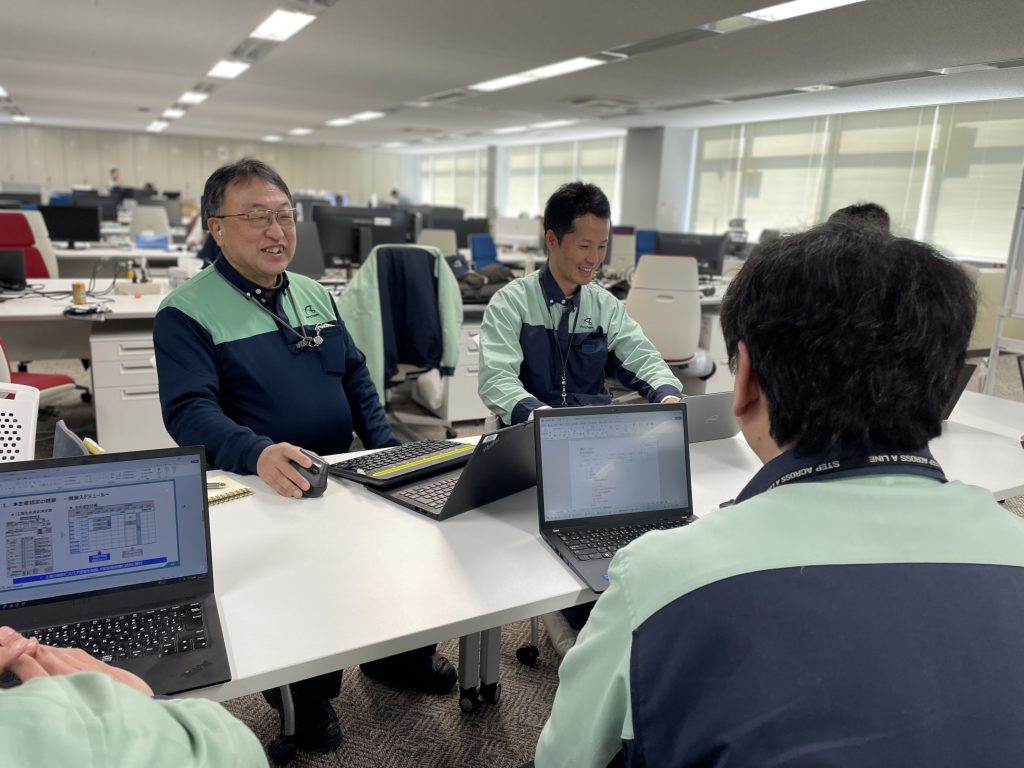
The culture of "awareness" that Hori speaks of is already beginning to take root in bases around the world.
Next, we asked Ms. Situ about the initiatives at each location that are tailored to the local culture and environment.
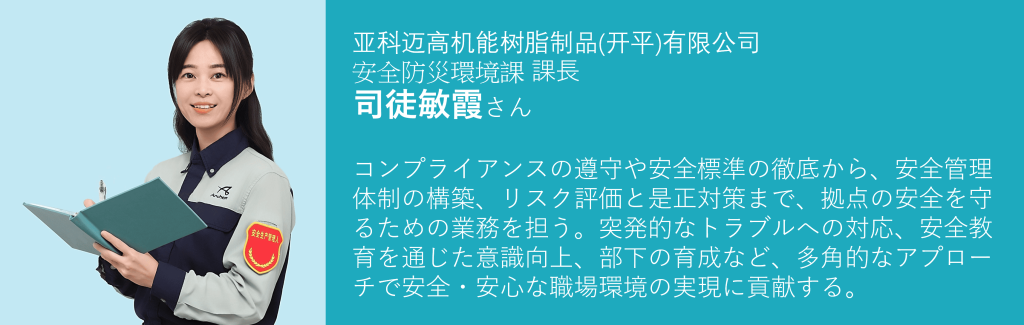
The key to success is people: listening to the voices of those on the ground
-Please tell us your thoughts on safety.
I believe that safety is the driving force behind the most sound development of a company. No matter how great a product or service you have, if it is not made in a safe environment, the company's growth will not be sustainable. Safety is the very foundation of a company.
-What kind of activities are you involved in based on that belief?
In order to instill the value of "safety" throughout the organization, we are first promoting the establishment of a safety management system. However, simply creating a system is meaningless. It only becomes valuable when it is actually put into operation. And I believe that the key to its operation is the "people" working on-site.
How do you actually interact with people on the ground?
I try to visit the workplace as much as possible and listen to what each individual has to say, because there are real issues and realizations there that you can't get by just looking at numbers and data in the office.
Furthermore, by communicating about safety on a daily basis, awareness changes from one-sided "top-down supervision" to "bottom-up safety activities" in which all employees participate. If our opinions are reflected, safety awareness naturally increases. In this way, we strive to establish safety awareness as a natural, everyday habit, rather than something special.
- Ms. Situ says that by listening to the voices of those on the ground, she naturally encourages safety behavior to take root. Next, she told us about the specific measures she takes.
Instilling a sense of safety naturally
Gain insight across the organization
Our core staff members leave the office and personally verify the implementation status of safety measures at the front lines, such as manufacturing sites. Furthermore, any issues or problems that arise are shared not only within the local area but also with all global locations, including Mr. Hori's Global Safety and Disaster Management Department. New insights gained by exchanging opinions while sharing each other's perspectives and know-how are used to improve our activities. We believe that this kind of organization-wide activity is driving a continuous PDCA cycle of improvement.
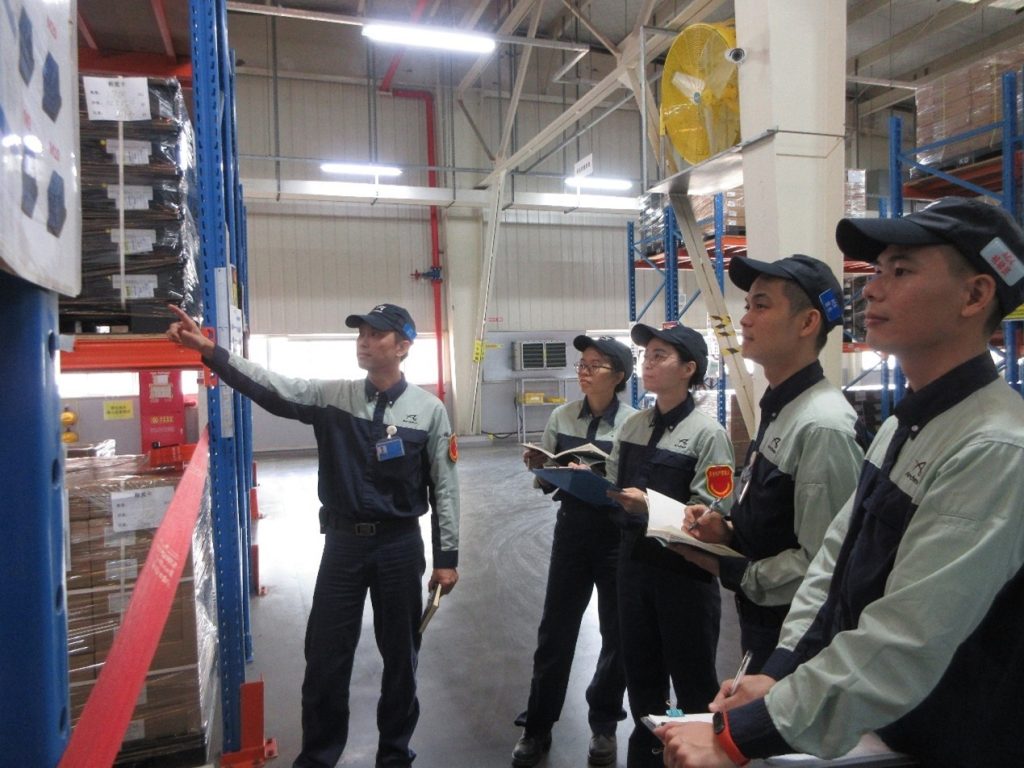
▲Safety inspections led by core staff
Key personnel from each department leave the office and conduct thorough safety inspections on the front lines.
Fostering a safety culture: Instilling a sense of safety
We are implementing safety pledges and campaigns as a company. We aim to build a sense of unity throughout the company and create a culture where a "safety first" mindset naturally takes root.
To prevent training from being one-way, we have adopted a small group size of 20 people or less. This has resulted in a shift from the traditional "supervisor speaking" style to a participatory style where "everyone speaks." This encourages proactive input and suggestions, leading to an increased safety sensitivity among each employee.
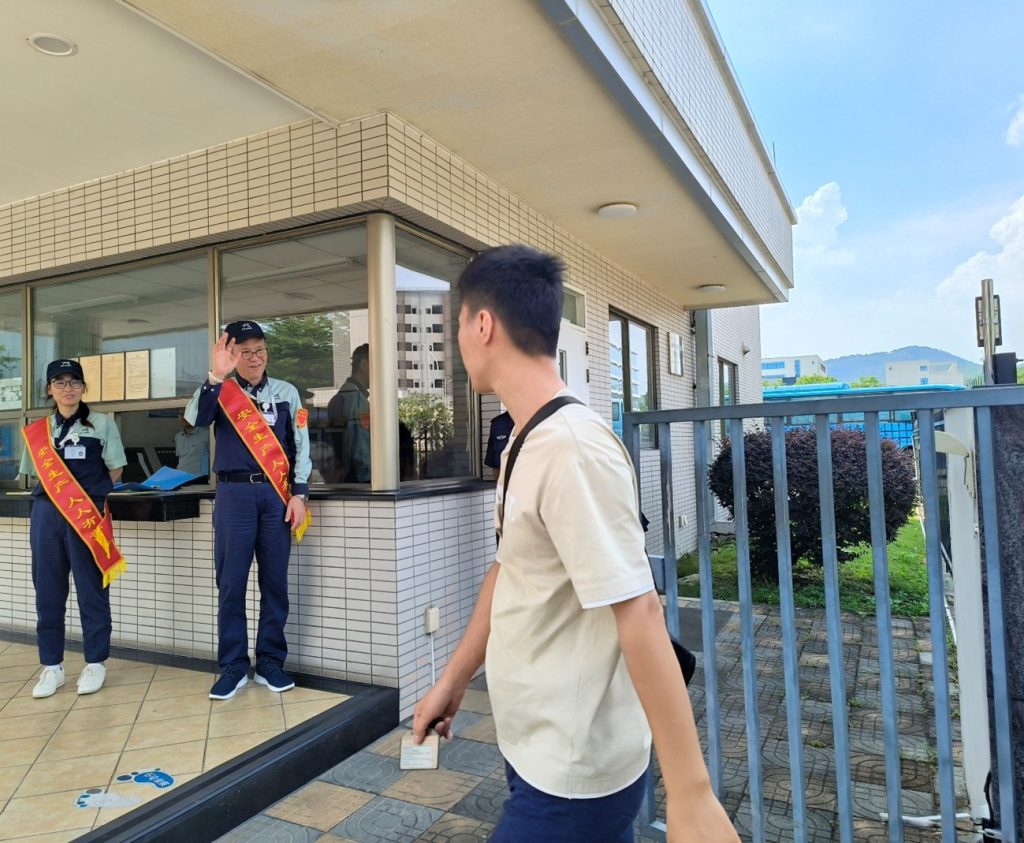
▲Safety campaign
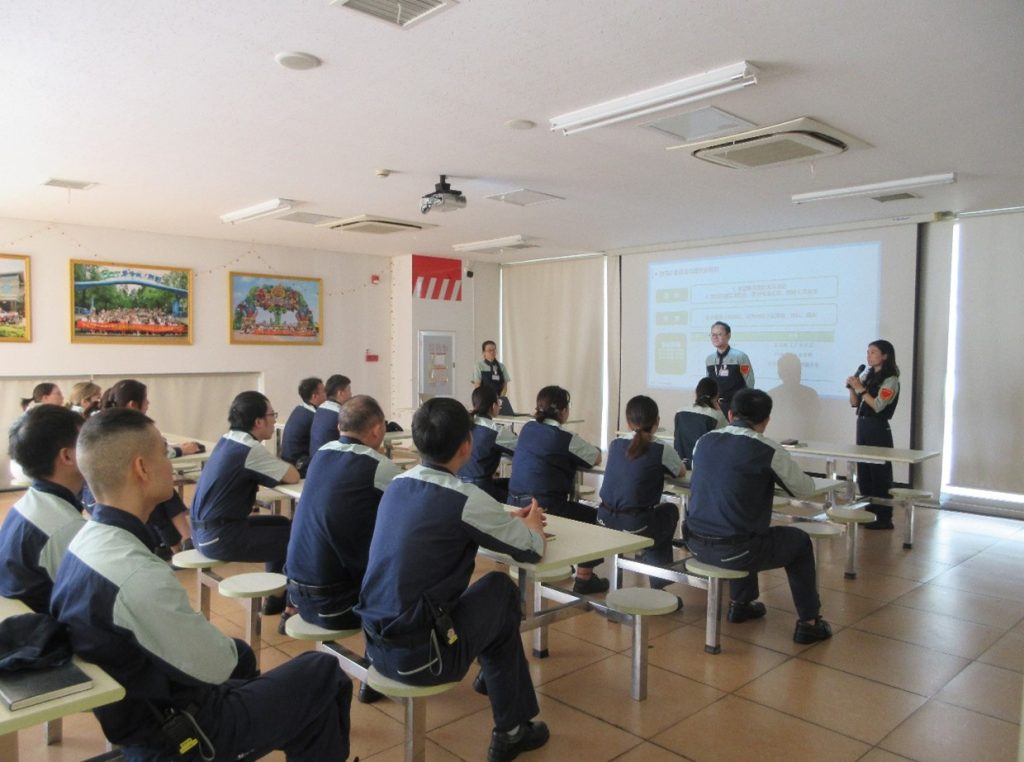
▲Safety education
By keeping classes small, we are able to provide a participatory education where everyone can speak.
Diversification of safety training: Maintaining sensitivity to safety awareness
If safety training is provided one-off, awareness will inevitably fade quickly. Therefore, we are conscious of "diversifying safety training" so that each employee can maintain a high level of safety awareness.
For example, regular training by the safety department and weekly on-site education are conducted in parallel, creating a system that creates synergy from both the management and on-site sides.In terms of education methods, we also place emphasis on "experience" using videos and real things, creating a practical environment that allows employees to deal with problems when they do encounter them.
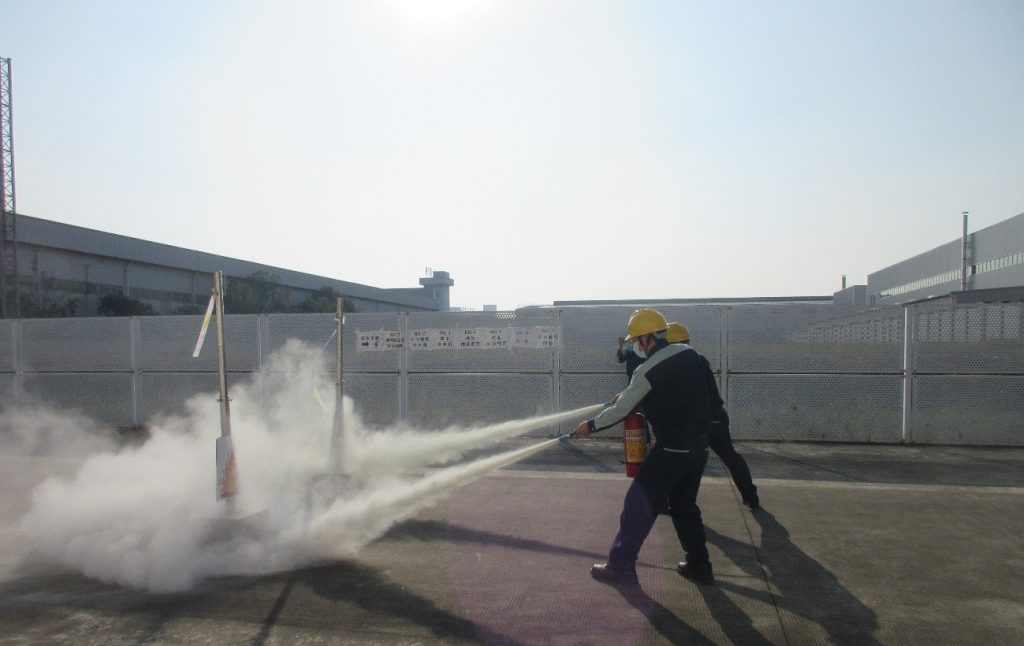
▲Fire extinguisher training
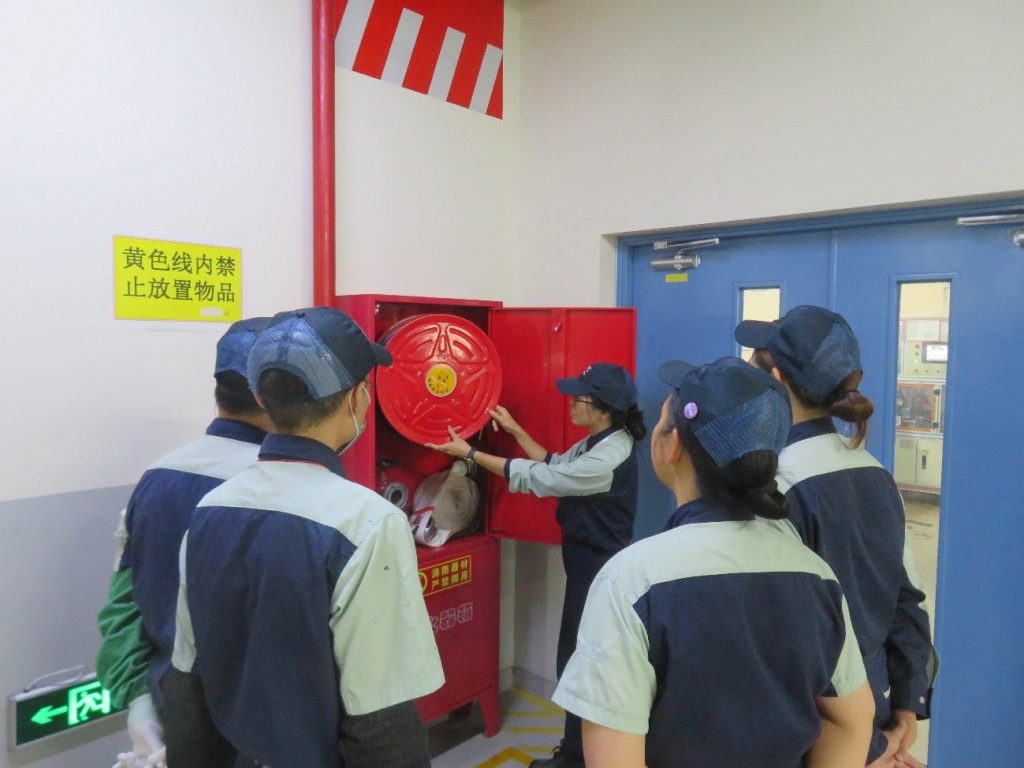
▲Fire reel training
-Finally, please tell us about your future prospects.
Building a safety culture is not something that can be done overnight. It may be a long journey, but I believe that "persistence is power." Our safety initiatives will contribute to the company not only in terms of the hard aspects, such as facilities and the environment, but also in the soft aspects, such as systems and people's awareness, and I would like to continue making efforts so that this will ultimately lead to the profits of the company and, by extension, the profits of society as a whole.
Mr. Hori and Ms.Situ cross borders and face the common mission of "safety" at their respective work sites. Their words conveyed their passion not only for systems and mechanisms, but also for the "people" who make them work, as well as their strong conviction as professionals who are never satisfied with the status quo. This interview was an opportunity to once again realize the tireless efforts that lie behind what we take for granted. Please look forward to their efforts to support "the norm" in the future.