

Magazine
NEW
Technology[Manufacturing DX] Transforming the intuition of skilled workers into data to deliver consistent quality to customers. Archem Nabari Plant takes on the challenge of participatory DX.
NEW
Technology[Manufacturing DX] Transforming the intuition of skilled workers into data to deliver consistent quality to customers. Archem Nabari Plant takes on the challenge of participatory DX.
In 2022, the urethane manufacturer "Archem" made a fresh start. As they restarted, one of the key measures they adopted to lead their manufacturing operations to even greater heights was "promoting DX (Digital Transformation)."
Leading the way was the Nabari Plant Archem Business Japan. What began at their two main manufacturing sites—"seat pads (automobile seats)" and "slab foam (urethane blocks used in the pre-processing stage for various products such as mattresses and pillows)"—was a challenge that went beyond mere efficiency: the "fusion of people and digital technology." We interviewed the four key people who spearheaded the project to learn about its journey.
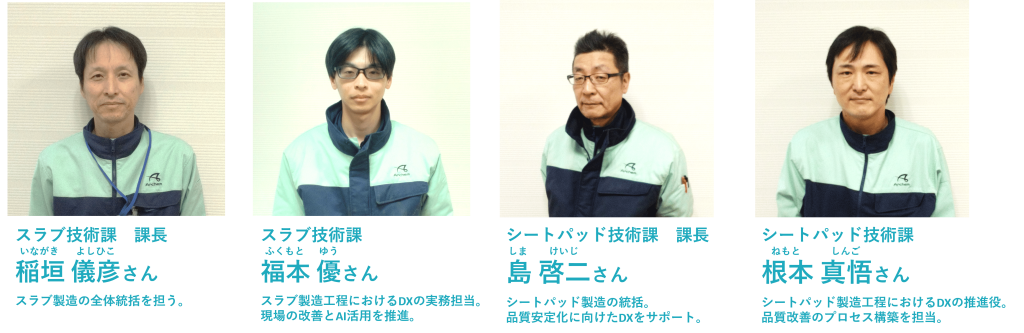
| A challenge that has been 20 years in the making. Why DX now?
—I understand that the project was launched because of a long-standing issue.
Inagaki: The main objective of this project was to strengthen the company's competitiveness. Our strength lies in the exceptional skills of our skilled technicians, but conversely, this also presented the challenge of "reliance on specific individuals and over-reliance on them." Although we had accumulated on-site data, much of it remained in paper forms and separate files, and we hadn't gotten to the point of analyzing the correlations. As a result, we were unable to completely prevent variations in performance due to changes in temperature and raw materials, and the losses that resulted from them.
Nemoto-san: The same applies to the sheet pad manufacturing site. I've been with the company for 20 years, including its predecessor, and since joining, I've been plagued by the difficult problem of "hardness variations" with no apparent cause. Is it the temperature of the day, the difference between raw material batches, or the manufacturing speed...? Numerous factors are intricately intertwined, and even with the experience of a veteran, we couldn't arrive at the "true answer." We were stuck in a stressful situation where we could only repeat temporary measures, and that's when we decided to break through with DX.
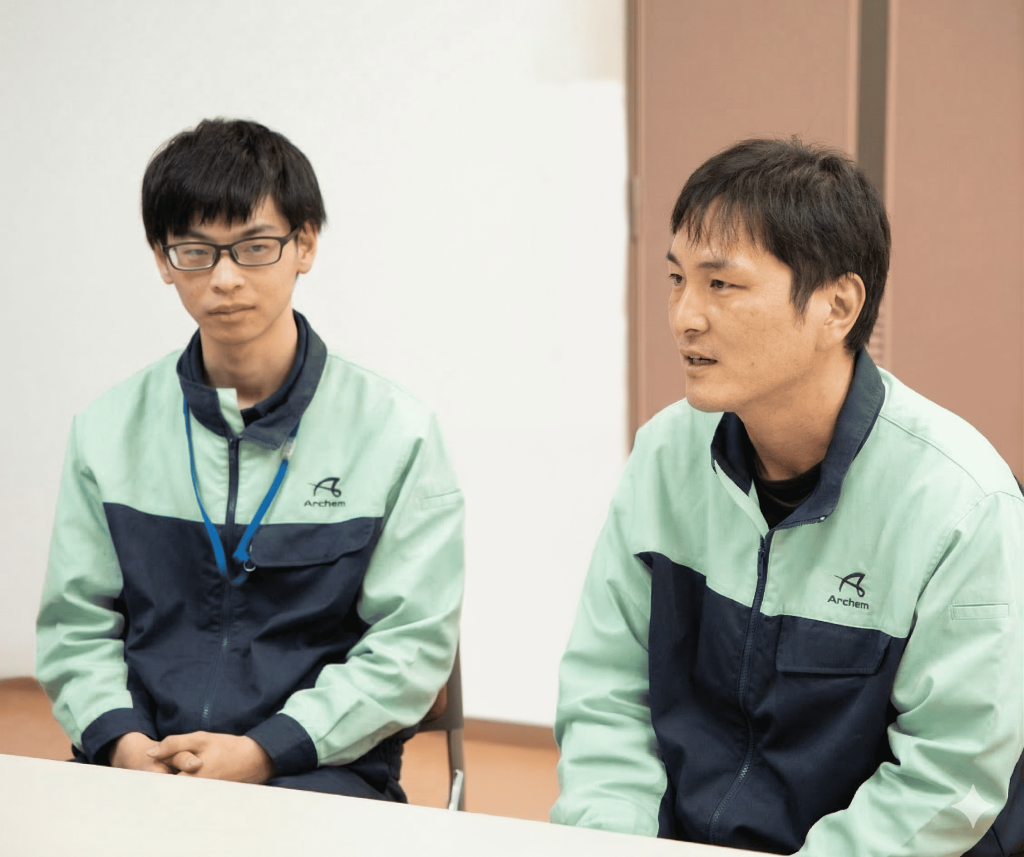
| Replacing "expert intuition" with "reliable numbers"
—What technologies did you implement to address that challenge?
Fukumoto: We've introduced an AI-powered process adjustment system in our slab manufacturing plant. We've transformed the tacit knowledge of delicate manufacturing condition adjustments, which were previously handled by veterans based on years of intuition, into a statistical model that has learned from a vast amount of past manufacturing data. This makes it possible to predict the optimal physical properties of manufacturing conditions in response to environmental changes, creating an environment where even less experienced staff can confidently find the best solution.
Inagaki: In terms of hardware, we switched from visually adjusting the corner shape of the block to automated data acquisition and control using high-precision sensors. By introducing digital control in 0.1 mm increments, we have succeeded in eliminating fluctuations in human perception and minimizing variations in quality to the greatest extent possible.
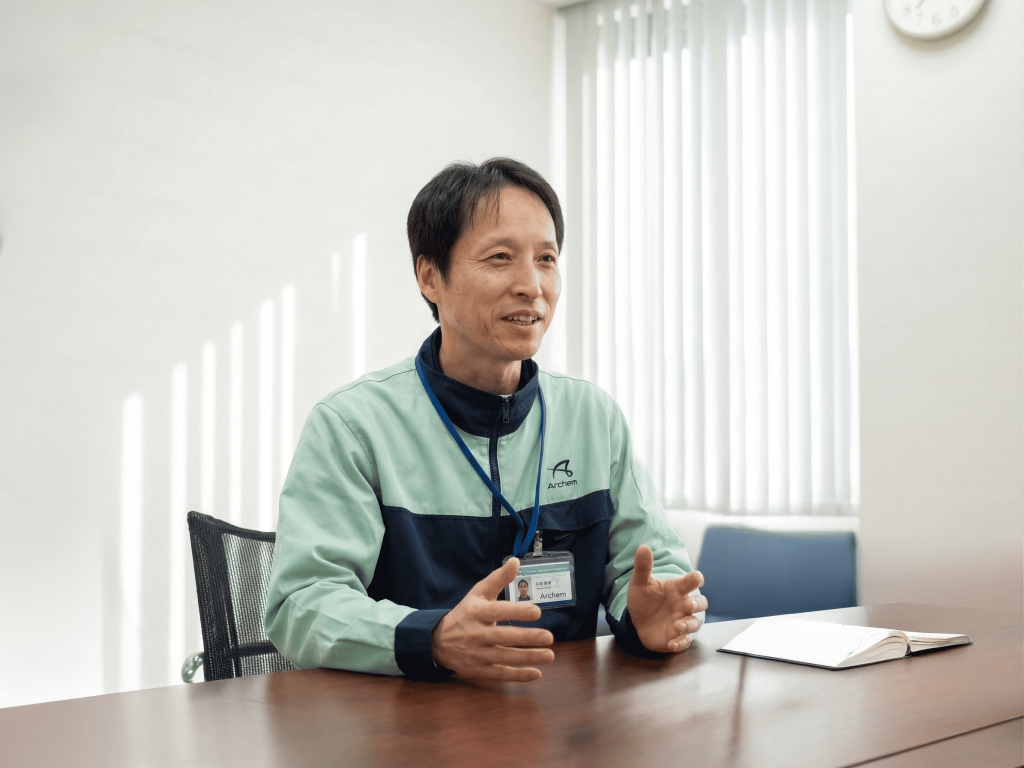
Shima: On the sheet pad side, we first eliminated the data fragmentation between processes and created a platform for centralized management. This allowed us to instantly identify the causal relationships, such as "how slight changes in molding conditions affect the final product hardness."
| On-site coordination and challenges
—Did the implementation go smoothly?
Nemoto: No, we hit a major roadblock in the initial stages. Although we had accumulated manufacturing data before, it wasn't optimized for the "analysis" required by this DX (Digital Transformation) process.
Therefore, the first step was to reorganize the vast amount of accumulated data and create a "blueprint" from scratch to bridge the gap to the new system. This foundation-building process was perhaps the most time-consuming and painstaking part of the project.
Fukumoto: As the system began to take shape, specific requests started coming in from the field, such as "We also want to produce this correlation diagram" and "We want to delve deeper into the basis of the predictions."
The challenge was to understand the needs of the field and translate them into a user-friendly and highly practical system. Bridging the gap between the ideal and reality involved a continuous process of trial and error.
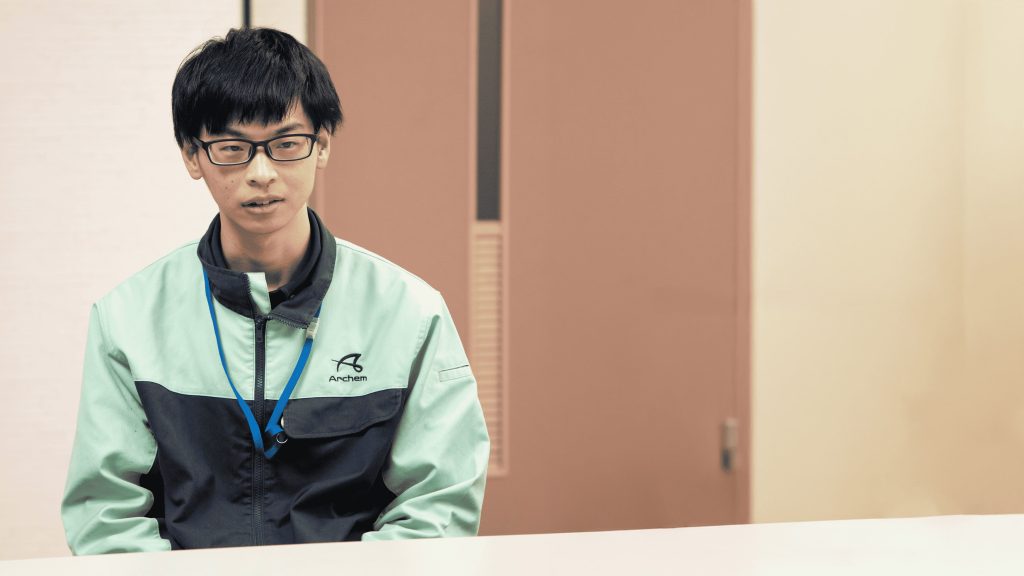
Inagaki: The slab manufacturing site, in particular, involves many people, and it's an area where quality has been supported by an intangible "expert intuition" that can't be put into words, such as making fine adjustments in response to changes in temperature and raw materials. Unraveling that tacit knowledge and translating it into a common language like digital was a major challenge.
Furthermore, digitizing operations will change work processes that have been followed for many years. We focused on "user-friendliness from a field perspective" to ensure that everyone on site can use the new system without any problems.
—What did you keep in mind when it came to getting the system implemented on the ground?
Inagaki: The key is to avoid "forcing system implementation" while leaving the people on the ground behind. It's the on-site staff who actually run the system, so true DX cannot be achieved without their understanding and acceptance.
Therefore, in one particular process, we deliberately take two years to implement the system in stages. First, we install the system on only one of the multiple pieces of equipment. We then incorporate the areas for improvement that become apparent and the feedback from on-site staff, such as "we would like it to be like this," into the system one by one. The following year, based on that experience, we expand the scope to two, then three more pieces of equipment.
It may seem like a roundabout approach at first glance, but we believe that building upon "dialogue" with those on the ground and reliably incorporating their unique insights and improvement suggestions into the system is the shortest route to truly user-friendly and optimal automation.
| Data-driven approach to achieving "quality stability" and "minimizing losses"
—Have you already started seeing any concrete effects?
Inagaki: In slab manufacturing, we have been able to significantly reduce waste. Another major achievement is that we have been able to alleviate the burden of monitoring and adjustment that previously weighed heavily on our on-site staff.
Currently, we are also utilizing generation AI, and the system is evolving to create an environment where people can focus on more essential activities, such as a system where AI automatically provides answers based on the content of standard files.
Nemoto-san: On the seat pad side, we've finally figured out the cause of the "inconsistency in hardness" that we've been struggling with for years.
While we are still only halfway to resolving the root cause, our extensive data analysis has allowed us to narrow down the key factors influencing quality to just a few items. Of course, human experience and intuition are essential for the final root cause identification and implementation of countermeasures. However, whereas before we felt like we were walking in a fog, now we have a map showing us exactly where to focus our attention. From here, we will pinpoint the true cause and translate it into tangible results in stabilizing quality.
| A new landscape drawn through "all-hands-on DX"
—Finally, could you tell us about your future goals?
Nemoto-san: We want to fundamentally solve the problem of "hardness variation" that has been troubling the sheet pad manufacturing site, and create an environment where everyone on site can concentrate on their actual work. With the introduction of DX this time, we can now discuss things that were previously discussed based on qualitative feelings, based on data and graphs. From now on, we would like to tackle problem solving with the combined strength of all departments, including other departments.
Shima-san: At the Nabari factory, we produce a wide range of seat pads to meet diverse needs. We want to establish a system that monitors this massive production situation with real-time data and maintains consistent quality at all times.
We are confident that achieving this will be our greatest contribution to our customers and will become the foundation of Archem 's world-class manufacturing.
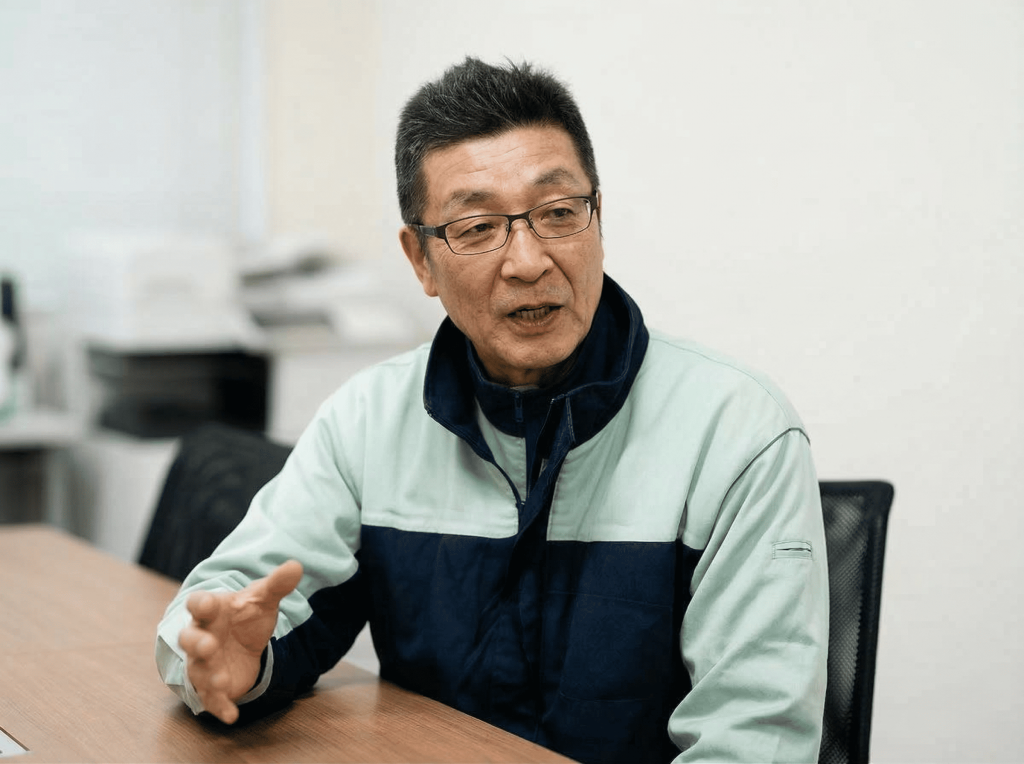
Fukumoto: By expanding the successful case studies we are currently implementing to all lines, we want to build a system where the field can operate autonomously with even greater precision.
Inagaki: To that end, we plan to hold "DX study sessions" going forward. We want to realize "all-hands-on DX" where new ideas are generated from the bottom up, by ensuring that everyone on the ground, not just a few people in charge, has knowledge of DX. We aim to create an organization where everyone can talk about the future from the same perspective.