

Magazine
NEW
PeopleThe joy of honing your skills in an evolving company.
~The sheer power of a 60-meter-long structure and the realism of craftsmanship. Challenging next-generation manufacturing in a dynamic urethane foam production site [Part 2]~
NEW
PeopleThe joy of honing your skills in an evolving company.
~The sheer power of a 60-meter-long structure and the realism of craftsmanship. Challenging next-generation manufacturing in a dynamic urethane foam production site [Part 2]~
Following on from the first part, we bring you the second part of our interview with Archem Business Japan 's Nabari Plant. This time, we'll focus on the "slab foaming process," which is practically synonymous with the Nabari Plant.
The slab foaming process is a dynamic and crucial line that mixes raw materials and foams and manufactures massive 60-meter-long blocks of polyurethane foam. We spoke with Tomohisa Yamaguchi, the foreman who supports the front lines of this process, and Tatsuya Matsunami, who works as an operator.

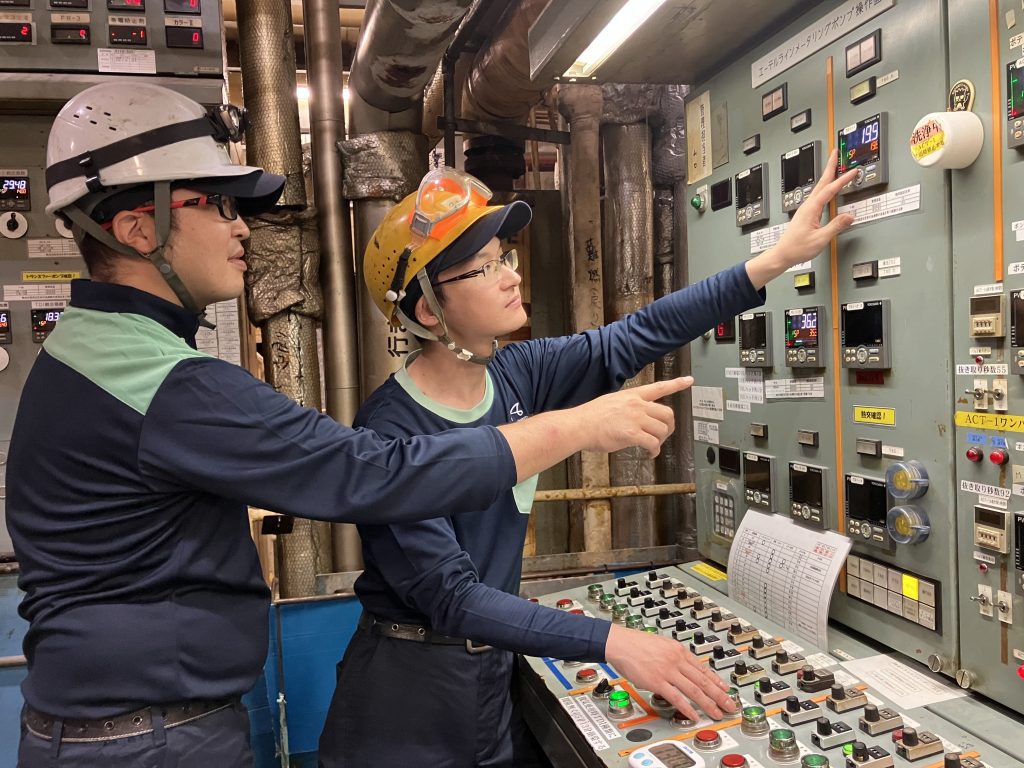
[People interviewed] (from left)
- TomohisaYamaguchi: Foreman, Slab Manufacturing Section 1, Manufacturing Department (Joined the company in 2000, 26th year)
- A seasoned veteran who has consistently worked in the slab foaming process since joining the company. He leverages his extensive experience and knowledge to lead the team and ensure safe and high-quality manufacturing.
- Tatsuya Matsunami: Manufacturing Department, Slab Manufacturing Section 1 (Joined the company in 2011, 15th year)
- Starting as a part-time employee, he progressed through processes such as the side impact process (production process for shock-absorbing materials in automotive interiors) before moving to the slab process in 2018. He is a key player on the factory floor, constantly honing his skills through trial and error and striving to become a foreman.
| The moment 60 meters of urethane is born - the scale of the "slab foaming process" that the Nabari factory is proud of.
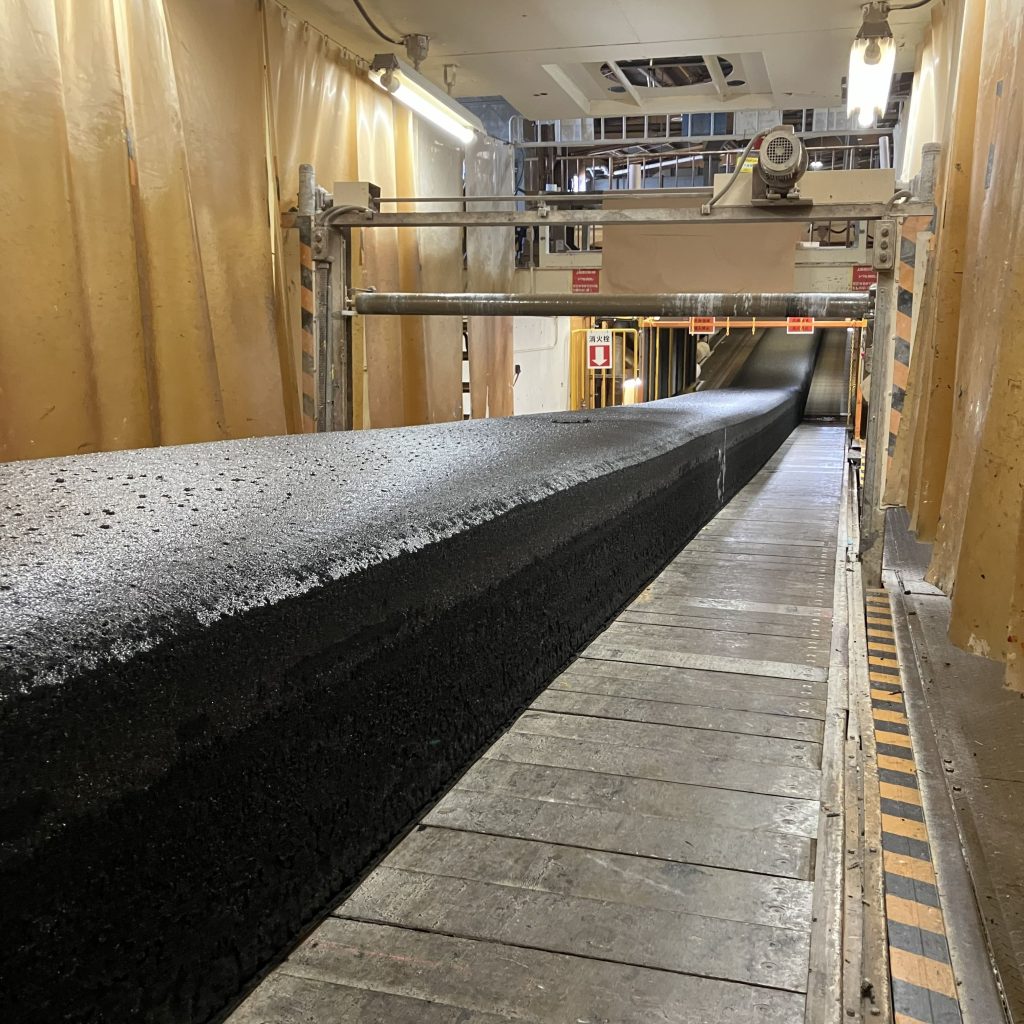
When the liquid raw materials are mixed and poured in, a chemical reaction causes them to expand rapidly, forming a gigantic block of urethane foam that is 60 meters long! You can see the black block stretching into the distance in the photo.
—The slab foaming line is practically a symbol of the Nabari factory. People seeing it for the first time are overwhelmed by its scale and sheer power, aren't they?
Yamaguchi: That's right. It only takes about 10 to 20 minutes to complete one block (60m in length). Once foaming starts, it's basically impossible to stop it midway. Everyone works under a high level of tension, with a strong sense of responsibility to "create high-quality polyurethane foam in one go."
Matsunami: I originally worked in the side-peg manufacturing area, but when I first moved to the slab process, I was simply amazed by the scale of the product and the speed required (laughs). But that's precisely why it's so interesting and fulfilling.
Yamaguchi: We basically operate the slab production line with a team of five people. At the start of production, we all gather at the raw material mixing area and then disperse to our respective positions. When we're focused, it's evening before we know it, and the day really flies by.
—Since you're making products that are 60 meters long, you don't stay in one place but move around while checking the foaming process, right? Are there any products that are technically difficult to make?
Matsunami: Of course, there are! Due to the specifications and characteristics of the raw materials, there are days when we have a concentration of "difficult-to-make products." Sometimes I find myself scratching my head thinking, "Wow, this week we have a lot of difficult products piled up on [day of the week]..." (laughs).
| The fusion of craftsman's sensibility and DX—quantifying "sensibility" to create a system that anyone can use.
—The reaction changes with temperature and humidity, so what is the secret to consistently producing a stable quality that meets the required standards?
Matsunami: Slabs can have subtle quality differences that are difficult to discern at a glance. Ultimately, what you can rely on is the on-site operator's "feel with their fingertips."
Yamaguchi: I check with my fingertips to make sure the product is finished to the standard hardness and condition. I can intuitively notice things like, "Ah, it's a little harder than usual today," or "The response is slightly delayed," just by touching it. To develop this sense, it's essential to touch the product every day and gain experience.
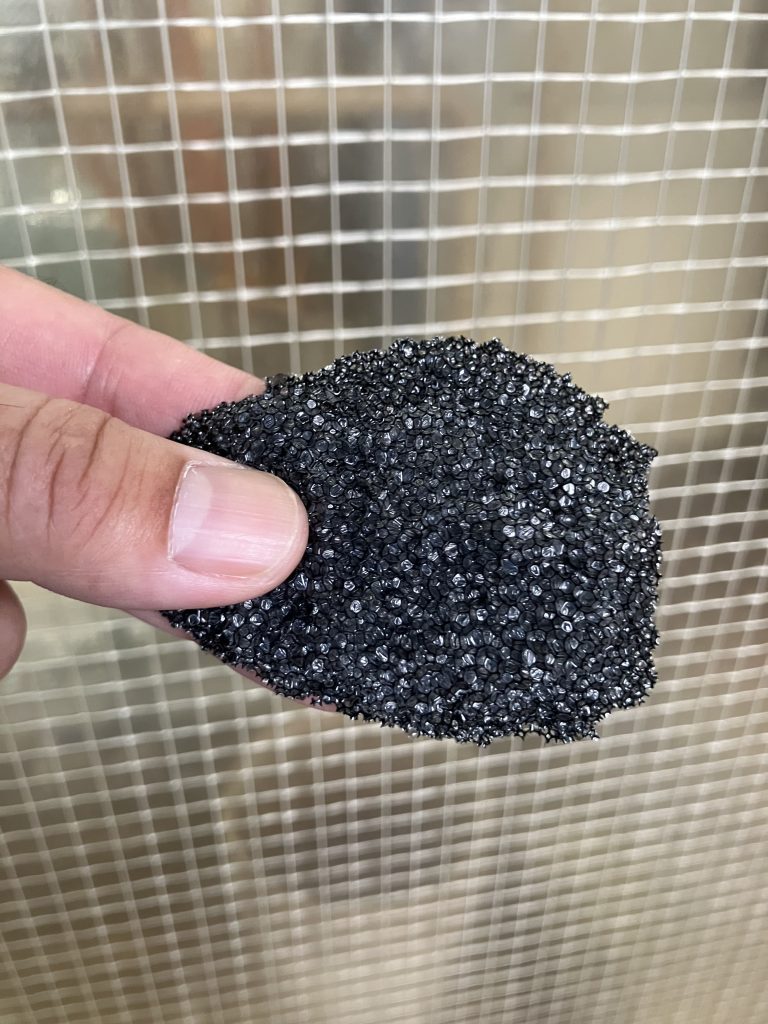
Making the same cell (skeleton) the same size involves a lot of technology.
—That's truly masterful craftsmanship! On the other hand, I hear that efforts are underway to avoid relying solely on individual intuition for that know-how.
Matsunami: Yes. Temperature control is especially difficult during seasonal changes, and quality is more likely to change. Up until now, when someone changed, the know-how tended to be reset, but now we are working with the technical department to convert parts that previously relied on human intuition, such as adjusting the load (pressure) applied from above during foaming, into numerical data. We are accumulating data for each temperature and humidity throughout the year, aiming for 'standardization' so that products of the same quality can be produced no matter who is in charge. It is very rewarding to be involved in the process of evolving by incorporating the latest digital technology while preserving the skills of veterans.
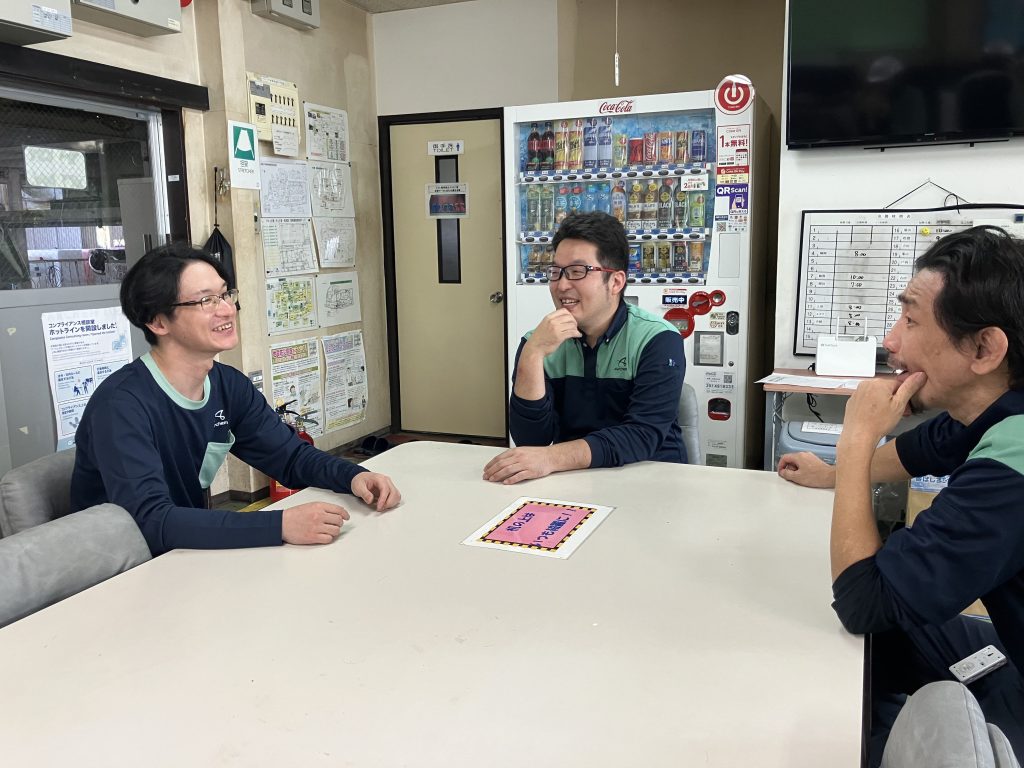
Matsunami, Yamaguchi, and Maekawa from the slab foam team (from left to right) are seen chatting amicably in the break room.
| Ensuring "safety first" through encouraging words and team bonding
—Since it's a site where large machinery is in operation, safety management and communication within the team are especially important, aren't they?
Yamaguchi: When we start the production line, we always shout loudly, "We're starting it now!" And we absolutely do not turn on the switch until we get a clear "Understood!" in response from a colleague who is in a different location. Thoroughness in this action and mutual confirmation are fundamental to preventing workplace accidents.
—I've heard that if something goes wrong in production, you also need the courage to stop the line.
Matsunami: That's right. When unexpected problems occur, we sometimes panic and get flustered at first. But the most dangerous thing is to try to handle it alone or to try to fix it on the spot. It's important to make sure that reports are made as soon as possible and to make decisions that minimize the damage.
Yamaguchi: When a problem occurs, I try not to scold the person at the time. First, I calm down the panicked situation and focus on the cause and countermeasures. After that, I take time to reflect on it and talk about measures to prevent it from happening again. It's a way to avoid letting it linger and to shift the focus to "the next improvement." I feel that people who don't hide even minor things and readily consult with me are more likely to prevent problems and grow faster.
Matsunami: I also used to hit some kind of wall at least once a day and get discouraged, but my seniors patiently guided me without giving up. Thanks to them, I feel that I can now see things more clearly and have gradually acquired skills and confidence.
| Moments when you feel the true joy and fulfillment of manufacturing
—What are some of the moments that make you feel happiest or proudest while working in the slab foaming process?
Matsunami: After days of meticulous adjustments and trial and error in collaboration with the technical department, we were able to reproduce a highly difficult-to-manufacture product with perfect quality! That sense of accomplishment is truly amazing.
Yamaguchi: I feel proud when I see the urethane we produced being used in everyday products around town. For example, when I see mattresses from famous furniture manufacturers or car interior seats in stores and realize, "Oh, this is made from the foam we produced at our Nabari factory," I can't help but secretly smile to myself (laughs).
| If you have the motivation, you'll grow rapidly! The ease of working at the Nabari factory
—Both of you have been working on-site for a long time. What are your impressions of the culture and ease of working at the Nabari factory?
Matsunami: I started as a part-time employee, but thanks to the positive evaluations I received, I was able to move up the ranks and now I'm entrusted with a core role in the production line. The system has changed compared to the past, and there's now a culture where even young people are properly evaluated and promoted based on their hard work and abilities. Because there's a culture where hard work is properly recognized and appreciated, I can maintain a high level of motivation to grow.
—I hear that compared to before, the staffing structure and multi-skilling (where one employee can handle multiple tasks) have improved, and that it's now easier to take paid leave.
Yamaguchi: If someone wants to take a day off, we have a system in place where team members can take turns and plan their time off. We maintain a high level of focus and concentration during work hours, but during breaks and after work, we joke around and laugh together. This good balance between work and leisure, and the teamwork where we support each other, is something we are proud of at the Nabari factory.
| A message to those who will lead the next generation
—Finally, do you have a message for students who are about to start their job search?
Yamaguchi-san: "When you think of factory work, you might imagine 'working silently and alone,' but in the slab foaming process, teamwork is everything. We especially welcome people who can greet others cheerfully and who can honestly ask questions when they don't understand something. Our reliable senior staff will teach you everything from scratch, so please feel free to jump in."
Matsunami-san: It's perfectly normal to have no knowledge or experience at first. What's important is the curiosity to "give it a try." Come and experience the excitement of seeing the huge urethane you've worked on being used in products all over the world at the Nabari factory! I look forward to working with you all.
[Editor's Note]
This two-part edition of "Archem Magazine" showcases the charms of the Nabari Plant. We interviewed three members of the management department who are taking on the challenge of transforming the organizational foundation, and the on-site professionals who are fusing advanced craftsmanship with digital technology on the front lines. What we strongly felt through the interviews was that, although their departments and job responsibilities differed, everyone shared a "challenging spirit that enjoys change" and "warm and open teamwork." At first glance, it may seem difficult to hear about "transforming the company" and "supporting manufacturing." However, at Archem, even inexperienced or young employees are entrusted with big challenges if they raise their hand, and even if they fail, there is a warm atmosphere and colleagues who will support them by thinking together about "how to prevent it next time." In the midst of a period of transformation, why not experience the excitement of business growth—driving both your own sustainable growth and the development of the company—at the Nabari Plant?