

Magazine
NEW
GlobalFirst company to receive the highest rating out of 132! The path to ACM Green Zone certification.
NEW
GlobalFirst company to receive the highest rating out of 132! The path to ACM Green Zone certification.
In March 2026, Archem Malaysia SDN BHD (hereafter, ACM), an overseas group company of Archem, obtained the highest local industrial safety certification, the "Green Zone" certification. Among 132 companies in Selangor state, Malaysia, which fall under the "Chemicals & Materials" category with risks leading to large-scale disasters, ACM is the first to achieve this certification.
■ What is "Green Zone" certification?
In Malaysia, this is the highest level of safety certification awarded by the local Department for Occupational Safety and Health (DOSH) to companies that are recognized as having an extremely high level of compliance with the Industrial Critical Accident Hazard Management Regulations (CIMAH *1) and that have a system in place to contain the impact of any accidents within the factory and prevent leakage or spread to the outside.
To receive certification, a factory must meet the strict national standards at a high level in all aspects and demonstrate that it is a model factory that autonomously maintains safety.
Obtaining this certification not only contributes to building strong relationships of trust with our employees and the local community, but also to creating new investment opportunities by gaining the trust of our customers, investors, and global partners, and further contributes to creating high-quality jobs.
*1 CIMAH
This is an abbreviation for Malaysia's "Control of Industrial Major Accident Hazards Regulations." It is a strict national safety regulation that mandates management systems to prevent accidents such as large-scale fires, explosions, and leaks in facilities that handle a certain amount or more of hazardous chemicals. Chemical and materials companies, in particular, are required to implement thorough equipment measures to mitigate the risk of serious accidents. Organic solvents used in the manufacture of polyurethanes and adhesives carry the potential risks of static electricity-induced fires and gas poisoning, requiring compliance with extremely strict safety standards.
"It is 'people' who drive compliance."
This remarkable achievement stemmed from such strong determination. But what kind of drama unfolded behind the scenes? This time, we spoke with Mohamed Khairi Musa of the ACM Safety and Security Department, who powerfully led the certification process, about the steady efforts behind it and his outlook for the future.
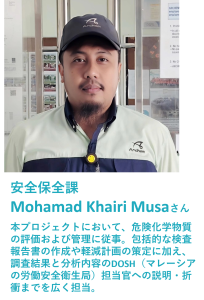
| The hurdles and value of achieving the highest rating, "Green Zone" certification
—Congratulations on being the first company out of 132 to receive this certification.
How difficult is it to obtain this "Green Zone" certification?
Khairi: Thank you.
As expected for the highest-ranking certification, the evaluation goes beyond simply confirming that "no accidents have occurred," assessing the factory's "overall capabilities," including the entire process. While state-of-the-art environmental and safety equipment is essential, the proficiency of the staff operating it, their ability to make quick decisions in the event of an emergency, and even the overall organizational culture are all evaluated.
In other words, I believe this is a highly difficult certification to obtain, requiring both a robust "infrastructure and system" and "professional personnel" capable of utilizing it effectively.
Obtaining this certification means that our company has demonstrated at a national level that we go beyond simply "following the rules" and routinely practice forward-thinking safety management.
—As expected of the highest rank of certification, there must be a high bar to clear.
Why was ACM able to receive "Green Zone" designation?
Khairi: Yes. First, in terms of "infrastructure and systems," our comprehensive management system for hazardous chemicals, including continuous monitoring and rigorous equipment inspections, was recognized. Furthermore, we have implemented pioneering risk elimination measures that go beyond legal obligations, such as an "oil separation system," "wastewater pH monitoring," and "static electricity testing" in solvent areas, which are still rare in typical local factories. This preventative approach has led to high praise from the local authorities (DOSH: Department of Occupational Safety and Health).
Furthermore, we believe that the development of "professional personnel" to operate these systems has greatly contributed to this evaluation. ACM has strong ties with its Japanese headquarters. Based on the safety philosophy of Japanese standards cultivated over many years, it has been refined to suit local specifications, enabling a crisis management system that goes beyond obligations. Comprehensive scenario-based disaster prevention training in cooperation with external organizations, the execution of detailed risk assessments, and the cultivation of a "culture of accountability" in which each member takes responsibility—these organizational stances that prevent safety from becoming a mere formality were evaluated as significantly exceeding industry standards.
| The speed of completion brought about by "culture"
—I understand you were able to advance the project very quickly when obtaining the certification. Could you tell us your secret?
Khairi: I think it's because a meticulous plan, a concentrated allocation of specialized resources, and organizational strength based on a "Japanese standard" of safety philosophy all came together successfully.
From the outset, we set clear goals and established cross-departmental teams. As a result, we were able to simultaneously handle a vast number of tasks, such as risk assessment and emergency response plan development, while maintaining a high level of accuracy.
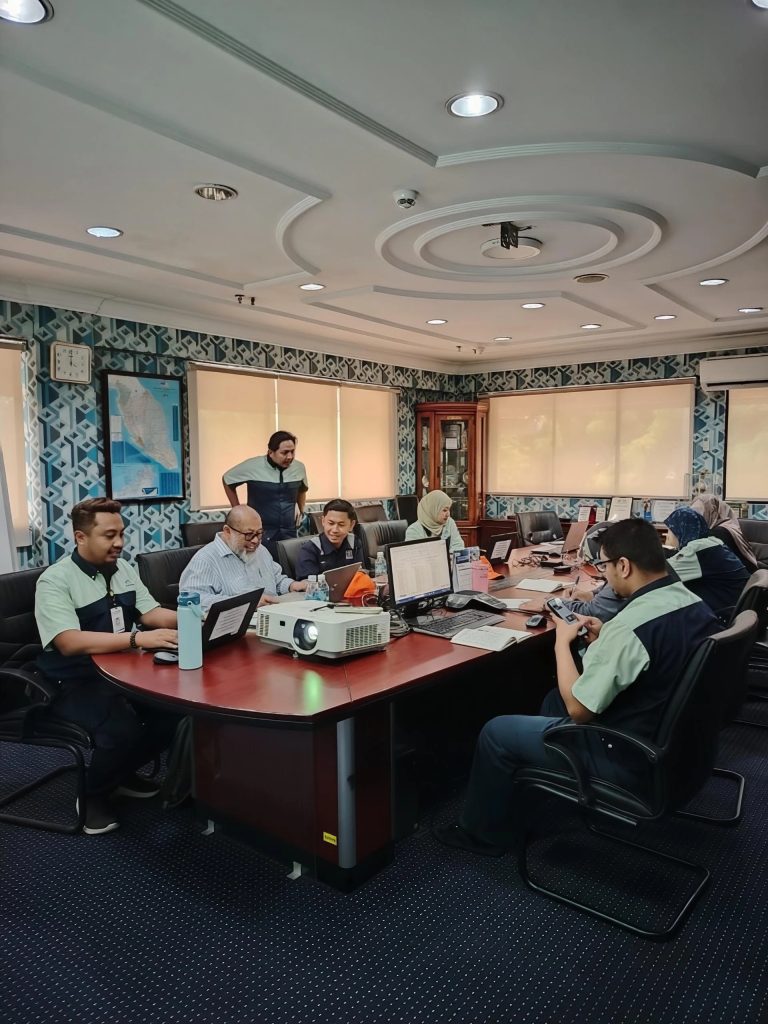
—So you achieved both speed and accuracy by working across departments.
Khairi: Yes. In addition, it was very important that we had continuous and close discussions with the officials in charge from the early stages about "what was required." Rather than keeping them at a distance as "the reviewers," we viewed them as partners with the common goal of "creating a safe environment," and actively engaged in dialogue with them. I feel that this open relationship minimized unnecessary work and supported efficient progress.
| Breaking away from "forced safety"
—I heard that the acquisition of the certification involved the introduction of new rules and management systems.
There was probably some resistance from those on the ground.
Khairi: Yes, to be honest, there were some voices of confusion at first. They were saying, "No accidents have happened as things are now, so why is such detailed management necessary?"
What we focused on was persistently communicating the purpose of each measure: "Why is this measure necessary?" We emphasized that all of these measures would protect our own safety, enhance the reliability of our work, and form the foundation of the company. We carefully explained the significance of each step and directly addressed the concerns of those on the ground.
—So, instead of just setting rules in name only, you engaged in dialogue until each individual could truly understand and agree with them.
Khairi: Yes. And we also made sure to demonstrate things through "actions," not just words. By conducting practical training and demonstrations and introducing the system, we showed concretely how the parts that previously relied on intuition and experience could be visualized, and as a result, how the work would become safer and more efficient.
Furthermore, instead of imposing top-down procedures, we created a system where the staff themselves could think about "how can we make this procedure better?" and participate in improvements. When they created the rules themselves, they naturally developed an attachment to them, and their desire to follow them increased.
Adopt ideas regardless of position.
—What specific initiatives did you undertake?
Khairi: One initiative that was particularly effective was the "Safety Innovation Challenge." This initiative solicits ideas from all employees, regardless of their position, on "how to further improve safety on the job."
—That's a great initiative to get all employees to take ownership of the issue.
Have any of those ideas actually been adopted?
Khairi: There are many suggestions. We received a steady stream of practical proposals from the field, such as improvements to chemical transport methods, strengthening piping designs, and even the introduction of digital monitoring to detect anomalies in real time.
The gradual implementation of these measures not only improved safety, but the greatest benefit was that it fostered a sense of ownership among the staff, a feeling that "we are responsible for our own safety."
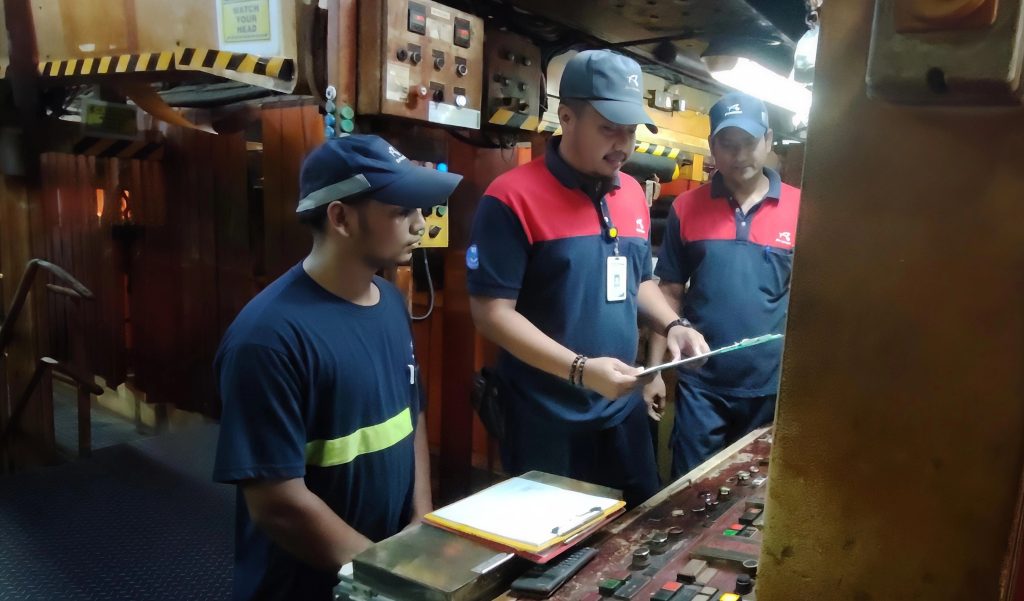
Compliance is driven by "people".
—From what I've heard, it seems that for ACM, compliance means more than just following the law.
Khairi: You're absolutely right. I believe that, ultimately, it is people who drive compliance.
No matter how excellent the safety system, the latest monitoring tools, or the perfect manuals, it is ultimately "people" who operate them and make decisions. If the people working there are indifferent, even the most advanced technology will be wasted.
—So, more than having the equipment and systems in place, the "awareness" of each individual using them is crucial, right? What kind of ideal form lies beyond that?
Khairi: We are in a state where we can nip any accidents in the bud before they happen. Our advanced digital monitoring system and our employees with keen sensibilities work together, complementing each other. And in all decision-making, "safety" always acts as the top priority filter. That is the state we are striving for.
Ultimately, what truly mitigates risk is not the technology itself, but the "awareness" and "attitude" of each individual employee who uses it. The reason we encourage the active participation of on-site staff is simply because we want them to realize that they are the core of safety management.
When employees take ownership and understand that "these are rules we will implement, rules for our own benefit," compliance ceases to be "rules imposed from above" and becomes a natural part of their daily work. Only when this state is reached can we believe that the "safety culture" we have long aspired to be truly complete.
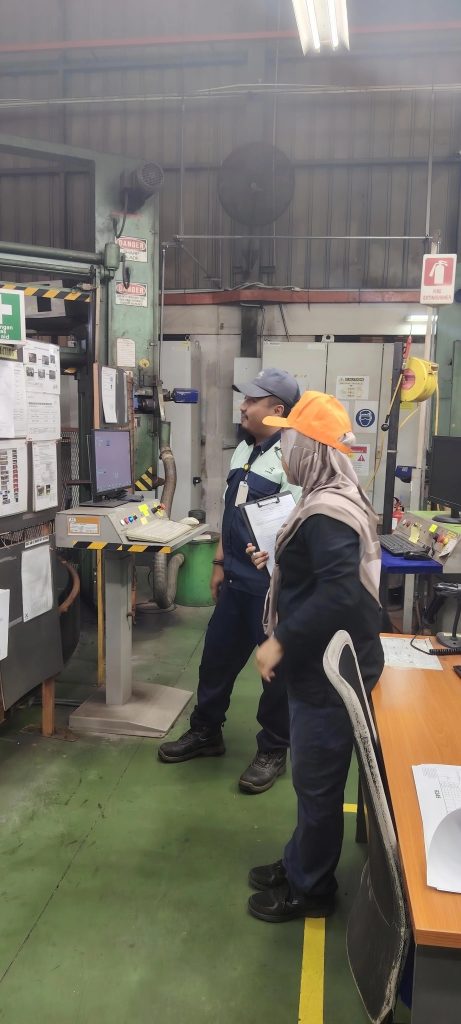
"Green Zone" certification is not the goal, but the starting point.
—Finally, could you tell us about your future goals?
Khairi: I see obtaining this "Green Zone" certification not as the goal, but as the starting point.
Going forward, we aim not only to maintain these high safety standards, but also to further integrate digital technologies based on the safety awareness we have cultivated, and to challenge ourselves to improve the accuracy of predictive risk management. Furthermore, we want to share the knowledge we have gained not only within our company, but also widely with people outside of it. We believe that contributing to raising the overall standards of the industry in this way is an important role that we must fulfill.
Our ultimate goal is to integrate safety not merely as an obligation, but as a fundamental part of our daily operations. And we aim to make this the source of Archem 's world-renowned operational excellence. We believe that this accumulation of efforts will lead to a future where we truly protect our employees, their families, our communities, and our irreplaceable planet.
Archem 's Malaysian subsidiary (ACM) has received the highest level of safety certification, "Green Zone," from the local Department of Occupational Safety and Health (DOSH).
■Main points of the article
- A first among 132 companies: Among 132 chemical and materials companies in Selangor state, it was the first to receive "Green Zone" certification for adhering to the strict Industrial Serious Accident Prevention Regulations (CIMAH) at an extremely high level.
• Pioneering safety infrastructure: Beyond legal requirements, the factory thoroughly implements preventative risk elimination measures such as "oil separation systems," "wastewater pH monitoring," and "electrostatic discharge testing," which are rare in local factories.
- Japanese safety culture: The safety philosophy of the Japanese headquarters is brought to the local level, fostering a sense of ownership among on-site staff through comprehensive disaster prevention drills and the "Safety Innovation Challenge," which solicits improvement ideas from across the company.
• A challenge towards a sustainable future: We position obtaining certification not as the goal, but as the starting point, aiming to improve predictive risk management using digital technology and share knowledge to raise the overall level of the industry.