

Magazine
NEW
PeopleFrom young employees to veterans, everyone works together as "one team" at Archem Business Japan Tosu Plant.
~Three leaders share their insights on building an organization that elicits genuine opinions from those on the front lines~ [Part 1]
NEW
PeopleFrom young employees to veterans, everyone works together as "one team" at Archem Business Japan Tosu Plant.
~Three leaders share their insights on building an organization that elicits genuine opinions from those on the front lines~ [Part 1]
"Archem Magazine" was launched to let more people know about the appeal of Archem. This time, we interviewed "Archem Business Japan Tosu Plant (Saga Prefecture)," which is responsible for producing seat pads that create a comfortable ride and seating experience in cars, as well as high-performance urethane parts for automotive and industrial applications. Archem Business Japan Tosu Plant is known as a model plant within Archem in terms of 3S (Sort, Set in order, Shine), education, and ease of work, and accepts employees from Archem Group locations both domestically and internationally for training.
Why is it so highly regarded? To uncover the secret, we conducted interviews with three leaders, including the factory manager, in the first part of this series, and with four people who support the factory floor in the second part. What emerged from these interviews was an organizational culture where individualized education and a spirit of mutual support thrive.
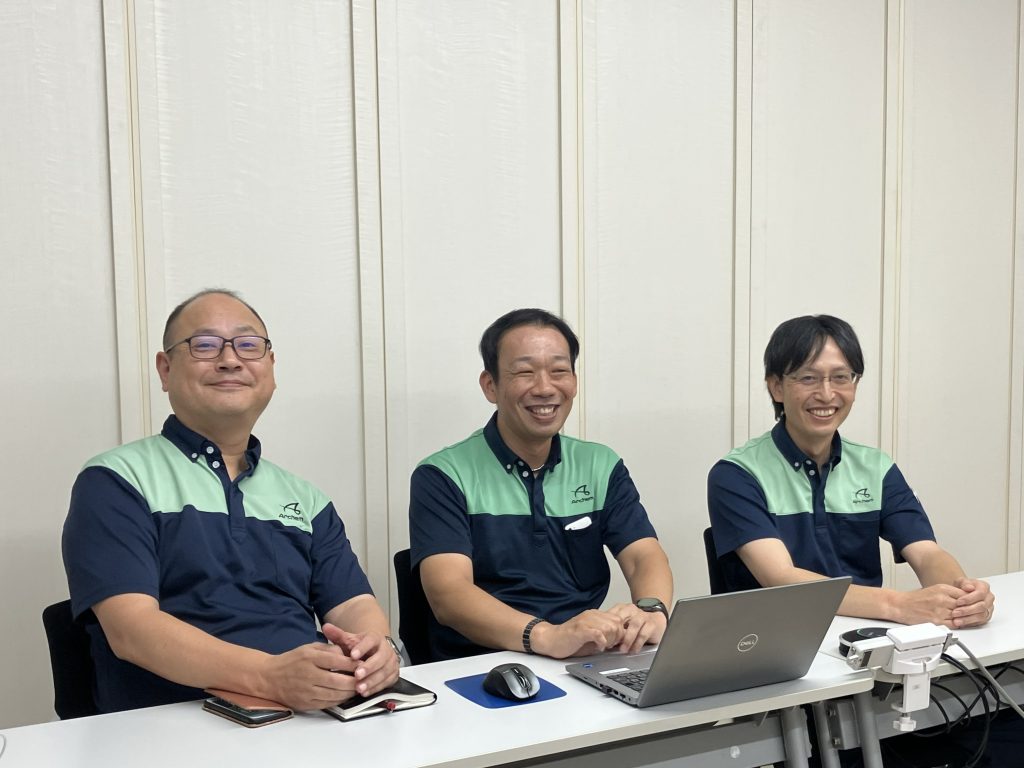
◆ The reliable leaders we interviewed this time (from left to right)
・Masanori Naoe
General Manager of the Second Seat Pad Business Division. He oversees two locations of Archem Business Japan: the Tosu Plant (Saga) and the Hofu Plant (Yamaguchi), and is ultimately responsible for managing the creation of synergies between the locations and the establishment of a medium- to long-term production environment.
Archem Business Japan recruitment website features an interview article highlighting him as "the production command center that drives the factory with on-site capabilities": https://www.archem.co.jp/recruit/acbj/interview/naoe/
・Yosuke Muta
Plant Manager of the Tosu Plant. He is the command center that oversees "safety, disaster prevention, environment, and quality" across the production of seat pads, vehicle parts, and industrial urethane parts.
・Kazuhiro Yamamoto
Manager (Department Head) overseeing the manufacturing technology and process management for vehicle parts and industrial urethane parts at the Tosu Plant.
—First, could you tell us about your work?
Naoe-san: My main role is to create the optimal production environment so that our two major facilities, the Tosu Plant and the Hofu Plant, can continue to produce high-quality products safely and stably every day. The products we make are directly related to the comfort and safety of automobiles that end-users experience every day. That's why I strive for proactive management to ensure that the production sites can perform at their best.
Muta-san: As factory manager, I oversee both the seat pad and vehicle parts/industrial urethane production sites in a cross-functional manner. My areas of responsibility are safety, disaster prevention, environment, and quality. This year alone, our factory has received more than 10 factory tours and audits from our business partners and others. I believe that this healthy sense of constant vigilance contributes to improving quality awareness throughout the factory.
Yamamoto: I'm in charge of manufacturing technology and process management for automotive parts and industrial polyurethane. While we say "urethane," there are actually many industrial needs beyond just car seats. To create products with diverse shapes and characteristics to meet customer demands, extremely detailed process management and flexible process design are required.
"Anticipation is key." The realistic daily life of the command center that keeps a factory running.
—Mr. Naoe, you travel back and forth between two locations. What is the most important thing you value in management?
Naoe-san: I strive for proactive management that enables the factory floor to perform at its best. Dealing with problems after they occur is too late. If the production line were to stop, it would not only inconvenience the entire customer supply chain but also place a heavy burden on the members working on the production floor. My role is to anticipate potential risks and take proactive measures before that happens, based on the latest production plans.
For example, it might be something like, "It's been getting hotter lately, so let's implement heatstroke prevention measures at the site earlier than usual," or "We're planning a sudden increase in production volume starting the month after next, so the workload on that process is likely to increase. Let's assign support members in advance."
—I see. If preparations are made in advance, the team members on site can focus on their work with peace of mind.
Naoe: That's right. However, no matter how well we anticipate risks, unexpected obstacles arise, especially when launching new products. Recently, we had a series of new vehicle models start production at the Tosu plant, and we faced an extremely difficult situation. Our team members are tackling it with a positive attitude, but since we're creating something new, when mass production for the customer begins, challenges beyond our predictions arise.
| Eliminating the feeling of being forced to do something. Communication that elicits genuine opinions from those on the ground.
—In situations like the initial stages of launching a new vehicle model, where unexpected problems can put a heavy burden on the production team, how do you support them?
Muta: When creating something new, or when a problem occurs—a change that's different from the usual—the team members tend to become intimidated, thinking, "What if I stop the line because of me?" If you just give orders from above at times like that, it inevitably creates a feeling of being forced to do it. That's why I make a point of asking questions like, "How do you think we can make this even better?" or "For example, there's this method, but what do you think from a practical standpoint?" I consciously try to communicate in a way that elicits spontaneous ideas.
Yamamoto: I also make it a point to visit the team members on-site, talk to them, and work together to come up with solutions. Because those directly involved in the daily work are bound to notice any "discrepancies." It's important for people in various positions and roles to regularly speak to people and draw out their honest opinions from different perspectives.
Naoe-san: Even big challenges can be broken down into smaller, manageable problems. In the morning, you decide, "Let's try this solution today," and in the evening, you verify, "What were the results?" By repeating this cycle diligently but quickly, you can successfully overcome challenges. Creating an environment where they feel motivated to improve the process themselves is ultimately the quickest way to resolve problems.
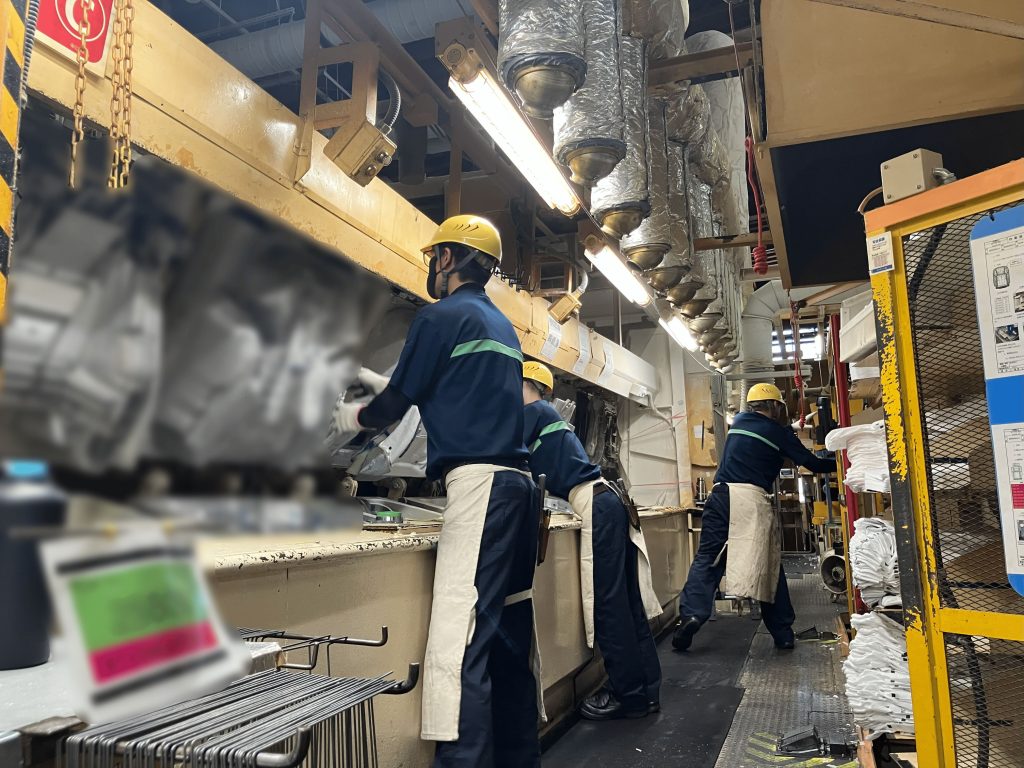
The production process of seat pads involves the factory's pride and joy: advanced craftsmanship.
| Creating synergy through exchange between locations
—Is there active collaboration and exchange between the different locations?
Naoe-san: In the case of seat pads, there has always been some movement between our locations for things like studying specifications and supporting the launch of new products. In 2024, Archem Forming Japan was integrated into Archem Business Japan, and since then, the exchange has increased even more. For example, the exchange between the Hofu Plant (formerly Archem Forming Japan) and the Tosu Plant has accelerated.
This exchange allowed us to re-examine the norms of each of our businesses. Specifically, this involved the product manufacturing processes in our seat pad business and our automotive parts business. For example, in one process, we deliberately added a dedicated inspection specialist to a two-person team to divide the work, which was previously completed by one person. At first glance, this might seem to increase the workload, but as a result, the number of defective products decreased, and rework in subsequent processes was drastically reduced. Overall, this has created a synergistic effect, improving both productivity and quality.
Muta-san: Staff from Archem America, which also produces seat pads like Tosu, have come to visit, and every time they see the process and the 3S (Sort, Set in order, Shine) practices, they are amazed and say "Amazing!" (laughs). Of course, the process may differ from one location to another, but even just looking at how the materials are assembled, the factory's proud, highly skilled craftsmanship—that is, the subtle intuition that cannot be standardized—is being reliably passed down to each and every young employee. This high quality of "skill transfer" is highly regarded by our overseas locations as well.
Based on these high-level skills, the Tosu factory functions as "one team." In the past, there were some barriers between the different locations, but now, if a problem occurs in Hofu, support comes from Tosu, and vice versa. Because the basic manufacturing (standard work) is the same, mutual support can be done smoothly. That's our strength.
—The greatest asset isn't just the exchange of technology, but the connections that can be made between people.
In this digital age, the investment we should be making is in "human resource development."
—Earlier we talked about the transmission of skills, but even with the advancement of digitalization and the introduction of AI and robots, is it still necessary to pass on manual skills?
Naoe-san: No matter how much automation progresses, I believe that the crucial parts of manufacturing still need to be overseen by people. In the end, the key to productivity and quality lies in the meticulous skills of those on the factory floor.
That is why we consider "human resource development," which ensures that the baton of technology and skills is reliably passed from our current mid-career and veteran employees to the younger generation, to be of paramount importance for the sustainable development of the Tosu Plant.
—What kind of training do you have in mind to help employees stay with the company for a long time?
Naoe-san:
I expect our current mid-career and veteran members to mentor younger employees. Furthermore, to ensure our employees can thrive in the long term, it's crucial to provide them with goals that match their individual strengths and abilities. Everyone has a role they excel in. Some excel in management, others in leading teams, and still others in specializing in specific skills. My mission is to eliminate mismatches and create an environment where each individual can feel proud to be a part of this company and thrive.
| The pride of being No. 1 as "One Team" and the appeal of working in Tosu
—How do you envision developing the Tosu Plant in the future? Please tell us about your future prospects.
Naoe-san: I hope that the Tosu factory will not rest on its laurels as a model factory for the group, but will have the pride to continue to be No. 1 in all indicators: productivity, efficiency, and quality. I fully understand that every factory in Archem Group takes pride in its manufacturing, and that management expects a high level from all of these locations. However, even among them, I want the Tosu factory to continue striving to be No. 1 in both productivity and quality.
Muta-san: I also come from a factory background, so I'm well aware of the hardships on the factory floor and the sense of accomplishment that comes from overcoming them as a team. What we're proud of at our factory is the open and friendly atmosphere where you don't feel any hierarchy, and the warm and caring members of the team. Each team competes healthily with the motto "We will absolutely not produce any defective products," creating a proud environment where everyone can learn from and improve together.
Yamamoto: I am proud of each and every one of our employees' strong awareness and sense of responsibility regarding achieving zero defects. We will also continue to work on improving the workplace environment so that everyone can work with peace of mind for a long time.
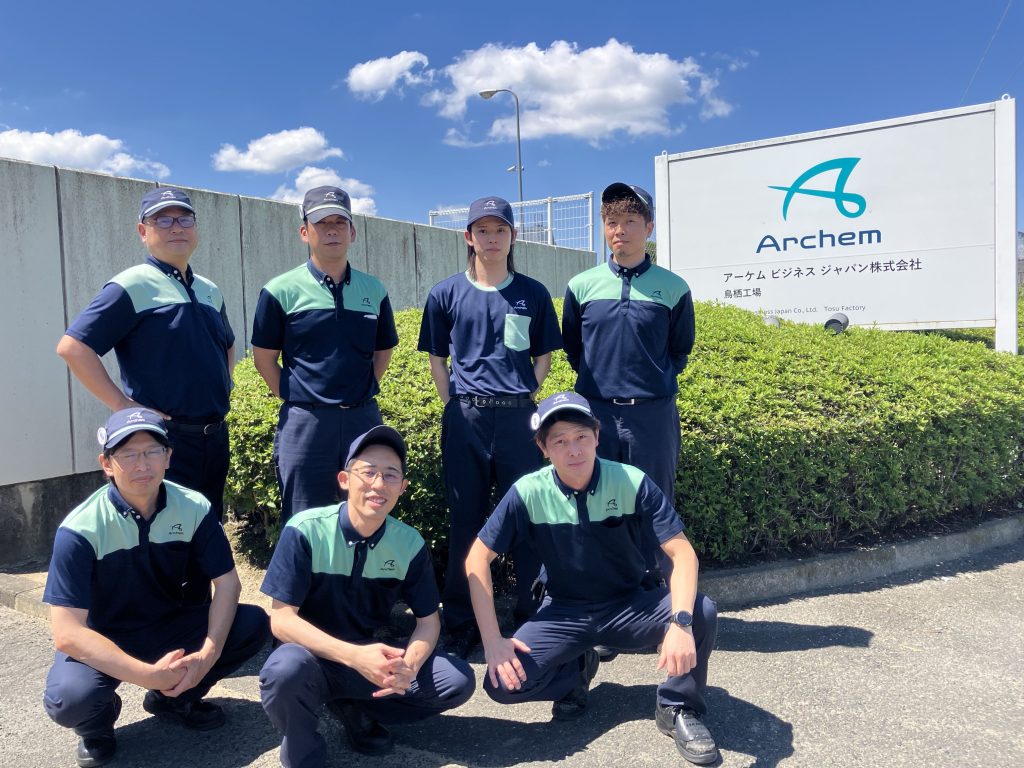
[Post-interview notes]
During the interview, the three leaders spoke with mutual respect and a touch of humor. While they relentlessly pursue quality without compromise, their approach is underpinned by a strong bond and warm humanity, driven by the shared desire to "create something great together." The team members on the ground respect each other, share ideas, and truly function as "one team." In the second part of this interview, we will delve into the genuine opinions of the young professionals shining on the front lines of manufacturing and shipping, whom these leaders highly praise!