

Magazine
NEW
GlobalBeyond "Women's Empowerment": The Power of an Organization Where Individuals Are Respected, as Proven by Archem China Base [Part 1]
NEW
GlobalBeyond "Women's Empowerment": The Power of an Organization Where Individuals Are Respected, as Proven by Archem China Base [Part 1]
"Manufacturing workplaces are male-dominated"—there's a base in China that's defying that image.
While there is a growing call for the advancement of women throughout society, the manufacturing industry remains one where the barriers to entry for women are still considered high. In this context, Archem 's Chinese subsidiary, Archem (Kaiping) Co., Ltd., Ltd. (hereinafter referred to as ACK), is a rare organization in which women make up approximately 70% of its total workforce.
Why are so many women able to continue to thrive as professionals at ACK? The answer lies in open dialogue that transcends job titles and a unique corporate culture that is deeply ingrained in the workplace.
This time, we conducted interviews with female leaders on the front lines of the organization. In the first part, we interviewed six factory managers and department heads, and in the second part, we interviewed twelve section chiefs, to explore the source of ACK's "organizational strength."
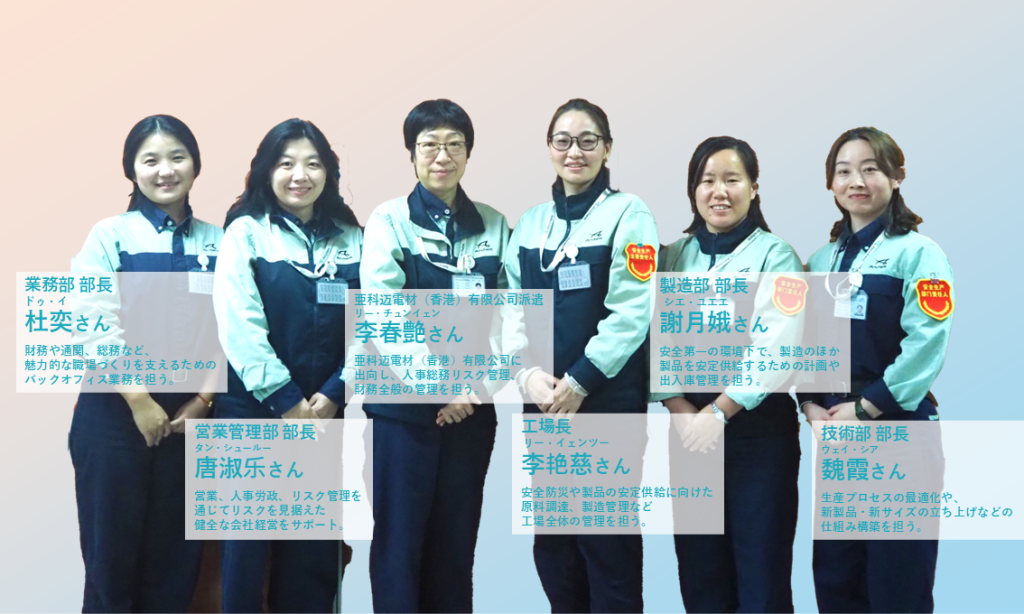
ACK's challenge began with a completely blank "box".
—First, I'd like to ask about how you all started your careers.
You are currently in charge of various departments as factory managers and department heads, but what was the situation like when you first joined the company?
Xie Yue'e: When I joined the company, ACK was just starting up, and we didn't have all the equipment; it was just an "empty box."
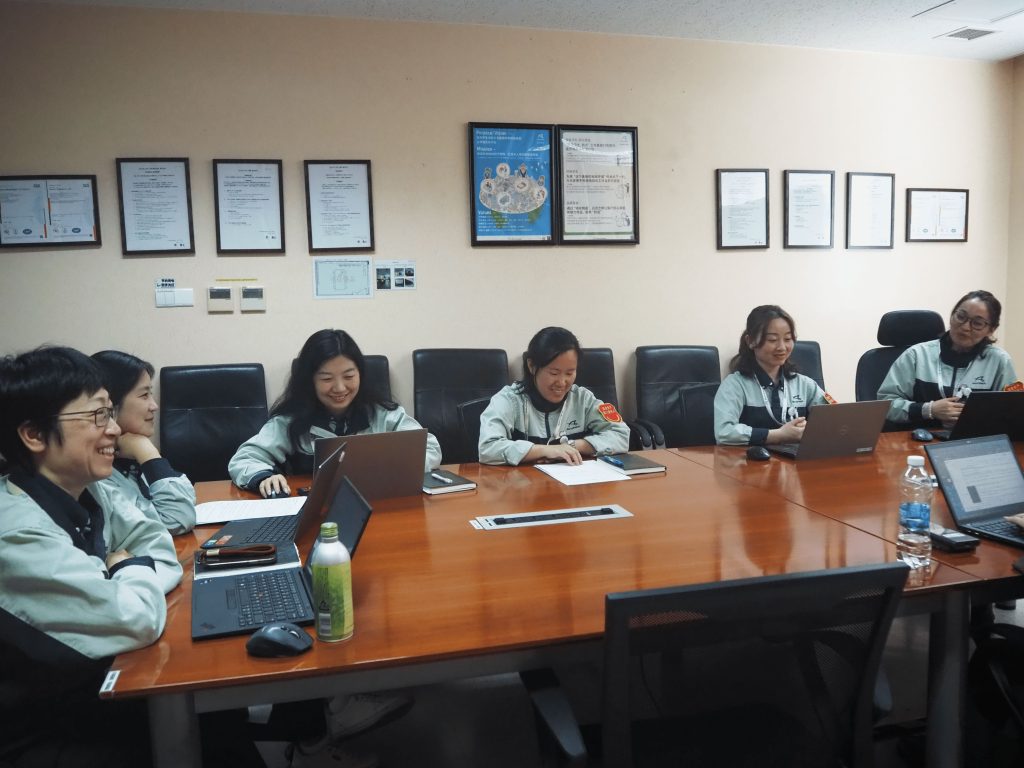
Tang Shule: I joined the company at the same time as Ms. Xie, and we really started from "nothing." Our first job was to set up the foundation for running the factory ourselves. We procured everything ourselves, from office supplies to production equipment. At the time, manuals were insufficient, so we had to check legal regulations from scratch, procure equipment, and work with customs officials to handle import procedures... Solving each challenge in front of us carefully, one by one, is what started it all for us.
Wei Xia: Perhaps because of that environment, ACK has a culture where "if you are sincere in the work in front of you, you will be given fair opportunities." I myself initially joined the company as a staff member on the manufacturing floor, but now I have been entrusted with a managerial position.
I stopped counting the things I couldn't do.
—Ms. Wei Xia, I understand you also experienced a major career change after becoming a department head.
Wei Xia: Yes. I experienced a transfer from the manufacturing department, where I had accumulated many years of experience, to the technical department, where I had no prior experience.
When I was approached about the position, to be honest, I was more anxious than excited, and my world went dark. I thought I would continue to build my career solely in manufacturing, so the idea of being in charge of an unknown area seemed completely impossible. At first, I gave a very negative response, saying, "I have neither the knowledge nor the experience. I absolutely cannot do it."
Li Yanci: I saw firsthand how confused she was. But even so, I was confident that she would definitely see it through.
—Why did you place such trust in them?
Li Yanci: First of all, she had many years of experience in manufacturing. Although the roles of manufacturing and technology are different, there are many areas that are closely related, and we believed that her skills and experience would be more than enough to handle it.
Above all, her hesitation and inability to do it were, in essence, a manifestation of her sincerity—her refusal to take on a responsible job with incomplete knowledge or skills. Knowledge can be learned later, but a sense of responsibility towards work is not something that can be acquired overnight. I believed that someone who knew the field so well and approached her work with more sincerity than anyone else would be able to succeed even if she changed fields, using that "sincerity" as her weapon.
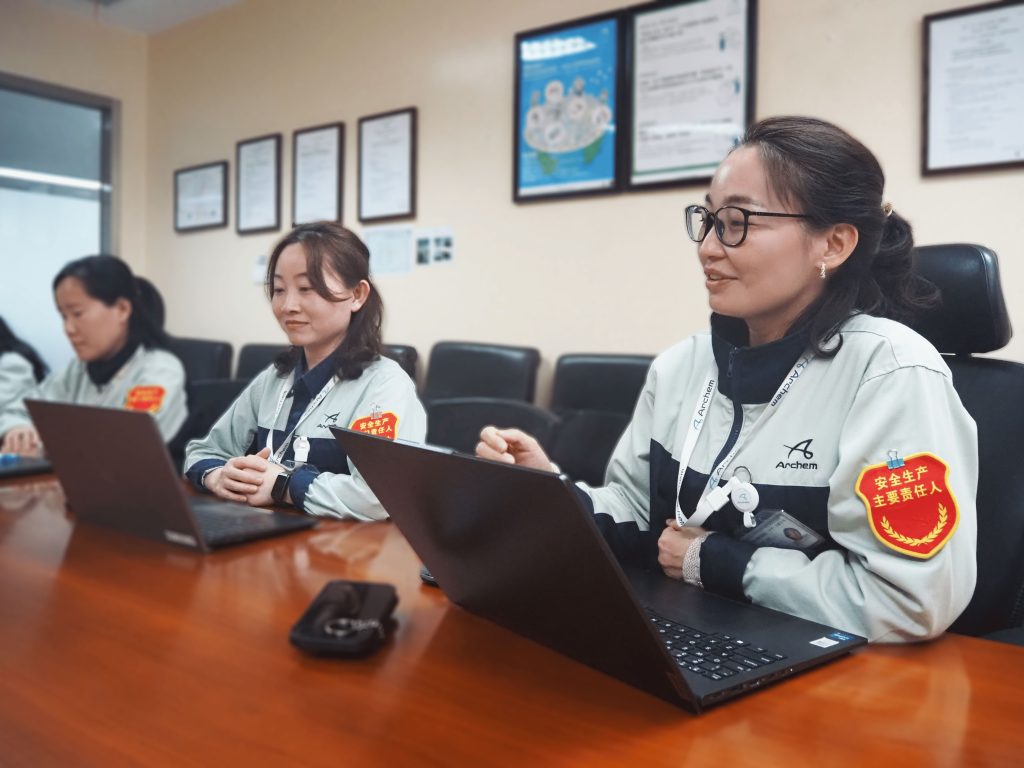
Wei Xia: I feel that I am where I am today because of that support. Before, I used to only count what I "lacked" and what I "couldn't do," and it made me anxious. But now, I've been able to focus on what I "can do." If I work hard at it, I can definitely turn it into something I "can do" someday. I've become able to think in a more positive way.
| Individual "integrity" fosters unity across departments
—Wei Xia's words, "It can be changed into 'it can be done'," are very impressive.
Were there any moments when the individual "sincerity" and "positive attitude" of those individuals became the strength that allowed the organization to overcome major difficulties?
Li Yanci: The most memorable experience was a new product development project. Due to a sudden surge in market demand, we had to launch a product with new specifications in an extremely short period of time. Normally, development and mass production take six months to a year, but we were given only two months. It was a schedule that was, by conventional standards, "impossible."
—How did you overcome that high hurdle?
Ms. Li Yanci: It was collaboration that transcended departmental boundaries. The development team considered the raw material formulation, and within hours of receiving the data, the manufacturing team created a prototype, and the quality assurance team immediately checked it and provided feedback... We continued this cycle with a sense of urgency. It was a project that would have fallen apart the moment even one person gave up, but no one gave up, and the way everyone helped each other across departments truly symbolized the unity of our company.
—The speedy coordination at the operational level is truly a strength of the organization. On the other hand, I understand there were also challenges that took a longer-term perspective.
Du Yi: Yes. What stands out to me is the project to obtain "AEO Advanced Certification (the highest rank of authorized business certification)," which the entire company worked on for about a year. This certification is required to gain the highest level of trust from Chinese customs, but the requirements for obtaining it are extremely strict and required company-wide cooperation.
Therefore, all departments, from finance and sales to manufacturing and logistics, needed to re-examine their existing practices and simultaneously implement new systems, scrutinize information, and restructure management methods.
Nevertheless, we all shared the common goal of "obtaining this certification to deliver our products to customers around the world faster and more reliably," and we persevered in resolving the challenges. I will never forget the sense of accomplishment I felt when we finally received the certification a year later.
| A shift in perspective, and the challenge of a "self-directed organization"
—You all currently lead many members as factory managers or department heads.
When your role changed from section chief to your current position, what kind of changes did you experience in your mindset?
Tang Shule: The biggest change is my perception of "responsibility." When I was a section chief, I was genuinely happy when my hard work and the results of my section were recognized, and it boosted my confidence. However, as a department head, I've come to deeply feel the weight of the fact that a single decision I make directly impacts the lives of my team members and the future of the company.
Du Yi: Up until now, I only needed to focus on myself and my department's work, but as a department head, I need to broaden my perspective. I'm required to judge things from multiple viewpoints, such as "What impact will this decision have on other departments?" and "Is this the right choice for ACK 10 years from now?"
—What do you keep in mind when trying to bring the members together?
Xie Yue'e: It's about sincerely engaging with each individual. This may seem obvious, but it's the most difficult thing to do. Everyone has different characteristics, strengths, and worries. First, listen without preconceived notions. Then, if there's a problem, work together to find a solution. Evaluate fairly and give opportunities. I believe that this kind of "basic sincerity" is the foundation of trust.
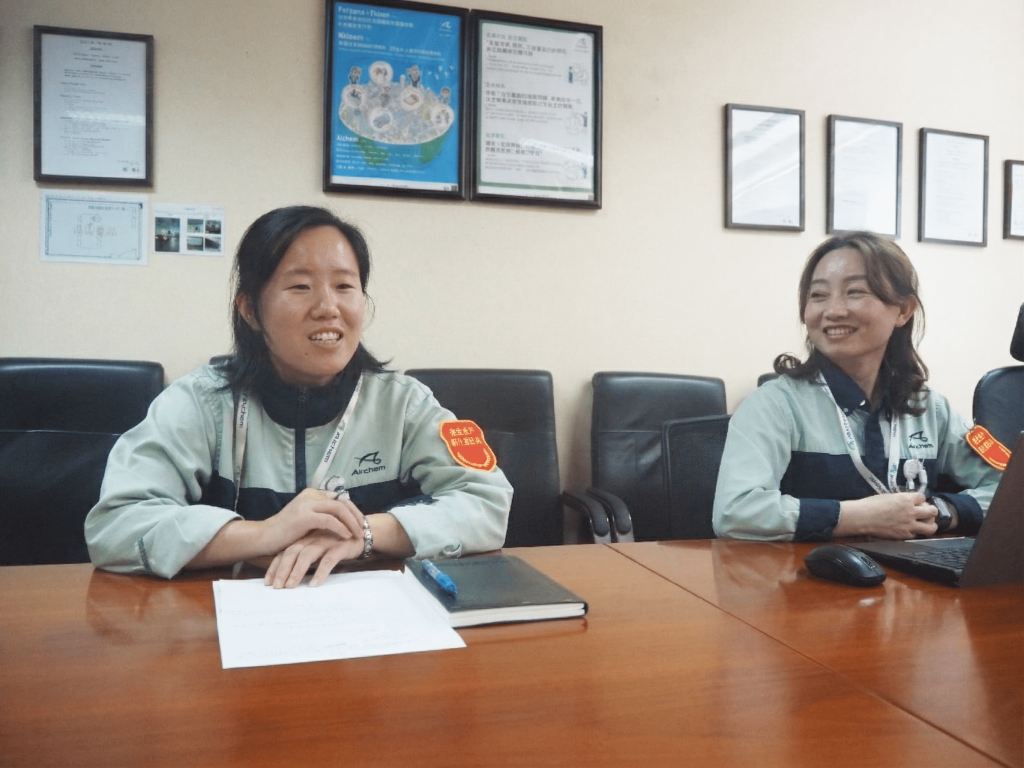
Li Chunyan: I make it a point to encourage the members to "think for themselves and take action." It's easy to give instructions when there's trouble, but that won't lead to the members' growth.
I ask questions like, "What do you think is causing this?" and "How should we solve this?" and even if the other person's answer is different from what I expected, I first accept it without dismissing it. Then, I explore solutions together by saying things like, "There might be this perspective as well." This accumulation of dialogue creates a sense of security, and now the members naturally start to voice positive suggestions like, "I want to do it this way."
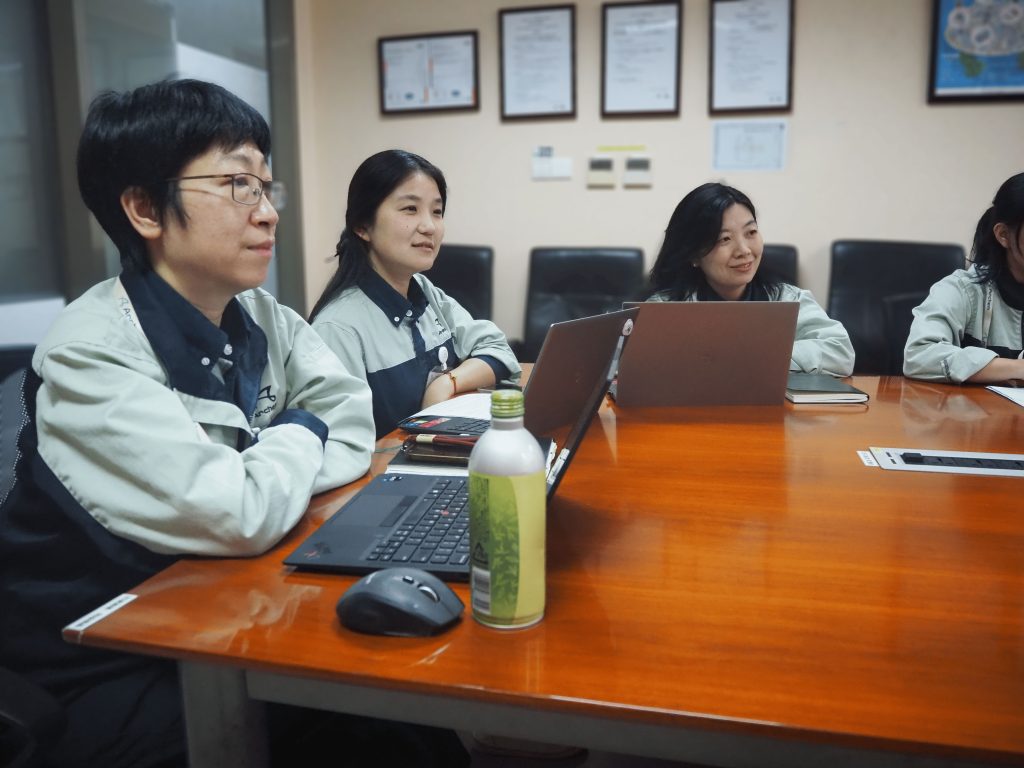
—So, that attitude of yours is what creates a vibrant workplace atmosphere, isn't it?
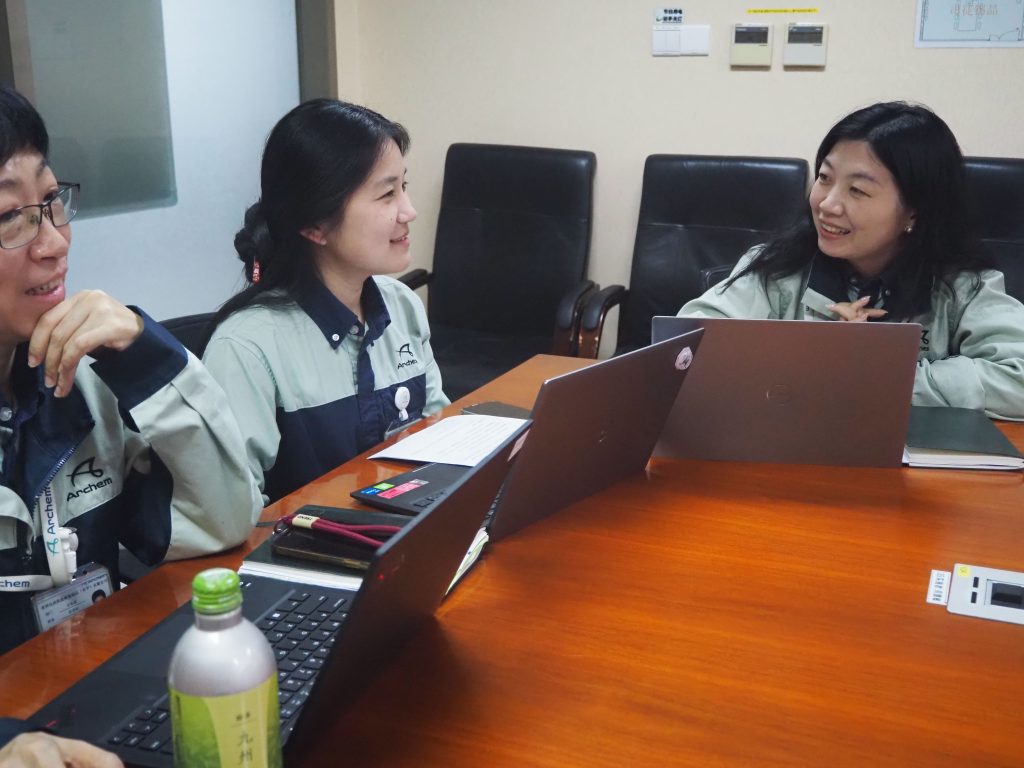
Li Chunyan: That's right. If you were to see our actual office, you'd see that ACK's office is really lively (laughs). There's hardly any time when it's quiet. That doesn't mean we're not concentrating; it's because discussions about work are always taking place somewhere, regardless of department or position. This "open communication," where people don't keep things to themselves but immediately discuss them, might be the source of our strong bond.
| Professionalism that lies beyond women's empowerment
—It's said that promoting women's participation in the manufacturing industry is difficult. What are your thoughts on this?
Wei Xia: I believe the essence of ACK's strength lies not in its high percentage of women, but in the environment where each individual is respected as a professional. We eliminate gender-based restrictions and biased evaluations, and treat each person fairly. It is because of this foundation that we have the current structure where many women are active.
Rather than aiming for "women's empowerment," we should build a culture where everyone is treated fairly and with respect. I believe that if we do that, "women's empowerment" will naturally take shape without having to force it.
Li Yanci: The reason we were able to become factory managers and department heads is not because we are women, but because our achievements were recognized as individuals. ACK is transparent and provides fair opportunities that everyone can agree on. I feel that it is because of this environment that we are able to maximize our inherent abilities.
What emerged from their stories was a strong sense of unity that transcended gender and departmental boundaries, and a sincere attitude towards the work at hand.
Driven by the culture of mutual respect and growth that they embody, we will continue to challenge ourselves to reach even greater heights.