Job introductions

Conservation

The products we use casually every day are produced with consistent quality, thanks to the maintenance staff who support the equipment.
Maintenance work involves supporting the stable operation of production lines through equipment inspection, maintenance, repair, and improvement.
They are the unsung heroes of the factory, preventing problems before they occur and supporting the manufacturing process with their technology.

Business content

Supporting the manufacturing site with technology

The job of maintenance is to keep production equipment running safely and stably at all times. This involves inspecting, maintaining, repairing, and improving equipment, playing a crucial role in preventing production line downtime. While the term "maintenance" is broad, the work encompasses a wide range of tasks, from maintaining mechanical and electrical equipment to troubleshooting and equipment improvements.
At Archem Business Japan, we manufacture products spanning two business areas: sheet pads and industrial chemicals. Each factory and business site has different equipment and production lines. That's why we support the manufacturing process by acquiring knowledge and skills tailored to each specific piece of equipment. What all our factories have in common is a culture of prioritizing safety and stable operation, and working together as a team to solve problems.
Seeing the equipment you've maintained and improved operate stably, leading to the creation of high-quality products—this is a job where you can truly feel the satisfaction of supporting manufacturing with your technology.

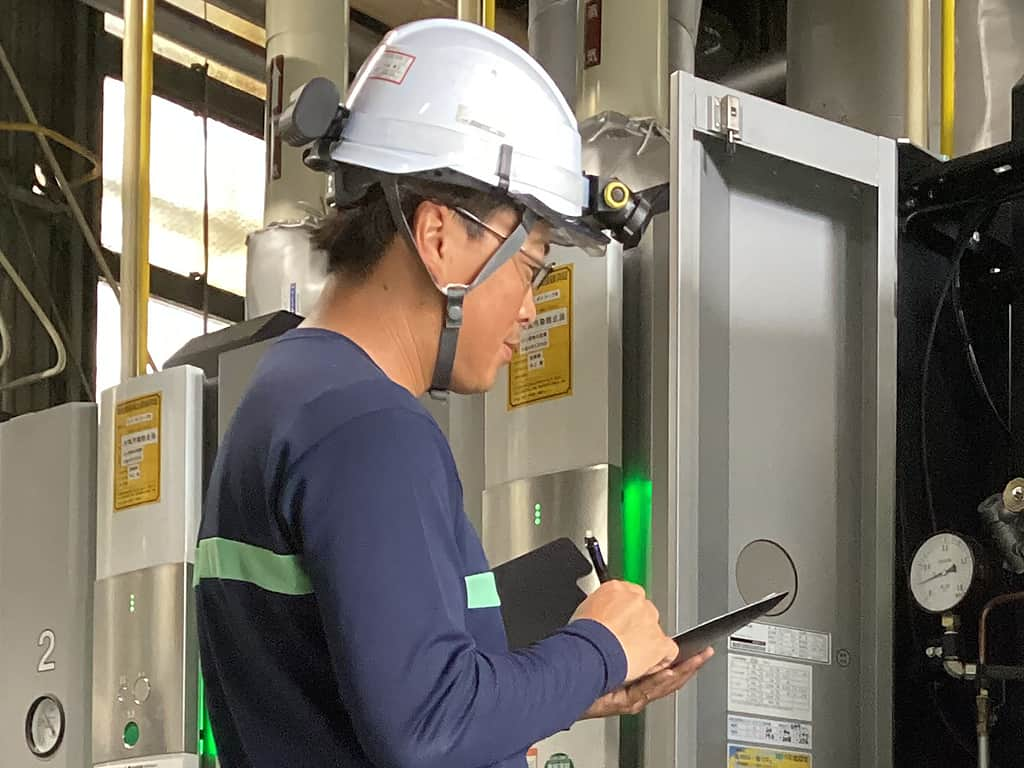
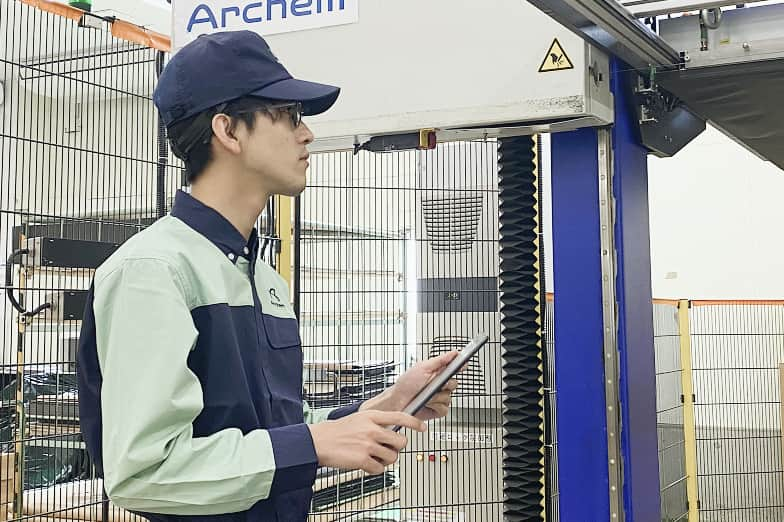
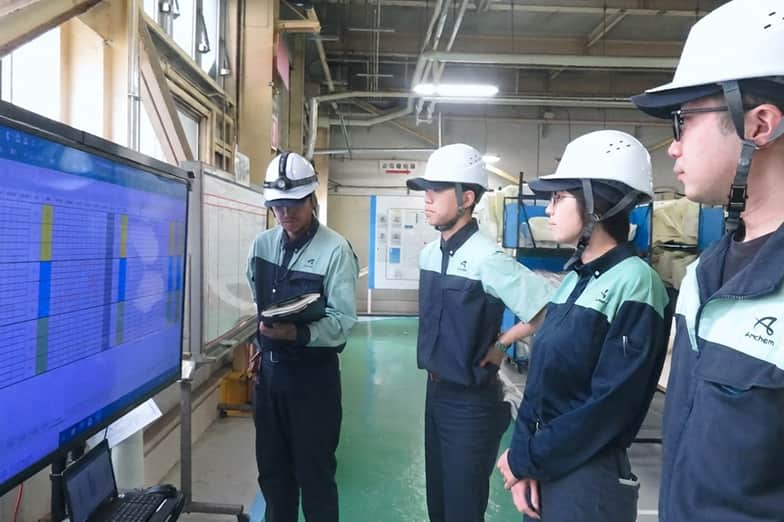
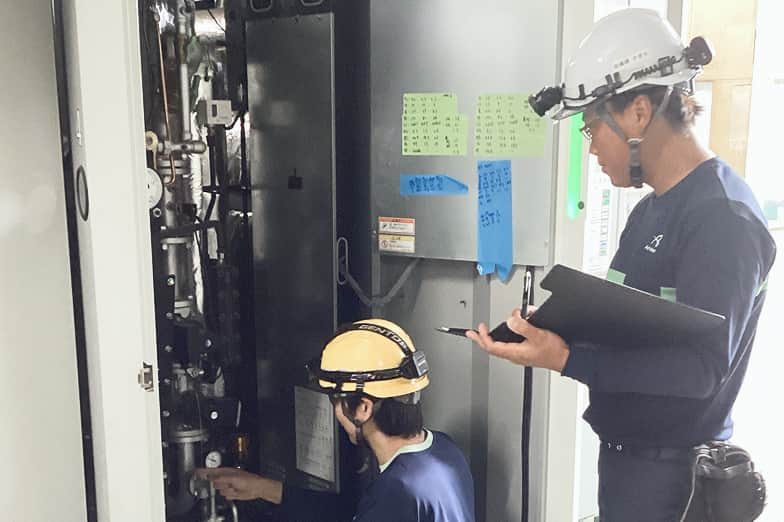
Employees in work clothes inspect maintenance equipment.

Scheduled maintenance

You will inspect the manufacturing equipment in your assigned area using all your senses to check for any abnormalities such as unusual noises, vibrations, or leaks. Based on the annual schedule, you will perform regular parts replacements and overhauls (disassembly, cleaning, and reassembly).

Troubleshooting and repairs

We rush to the scene as quickly as possible, investigate "why it happened," and carry out restoration work swiftly. Beyond simple repairs, we also plan and implement permanent measures to create a safer work environment.

Equipment renewal

We proactively propose improvements to existing equipment from perspectives such as, "How can we increase productivity?" and "How can we work more safely?"

Daily Routine

  1. Arrive at work, morning meeting, safety check

    The day begins with a safety check. We share information to ensure that there are no malfunctions in the machinery that was operating during the night shift.

  2. Monthly inspection of production line equipment

    Each of our numerous production facilities has a designated inspection date, and inspections are carried out accordingly. During inspections, we check for and replace consumable parts, and perform preventative checks to ensure that no malfunctions occur.

  3. lunch break

    60-minute lunch break. Take a break in the cafeteria or break room.

  4. Production line inspection

    We check the production status for the morning. We conduct thorough daily inspections to ensure stable machine operation at all times.

  5. Parts maintenance

    We disassemble the parts of operating machinery and perform repairs and parts replacement work.

  6. Meetings (within the department and with other departments)

    We hold meetings within our department or with other departments to share any problems on the manufacturing line. These meetings are essential for creating a better work environment.

  7. End-of-day meeting

    We share information about the inspections and repairs carried out on the day with all team members and plan the work for the following days.

  8. Leaving the company

*Actual schedules may vary depending on the assigned factory and process.

The rewards of this job

  • Supporting factory production

    Although it's not a job where we actually manufacture the products ourselves, we play a vital, behind-the-scenes role in supporting the entire factory.

  • Turning improvement suggestions into reality

    There's a constant need to modify and improve the equipment that supports the factory. There's a certain satisfaction in incorporating your own ideas to make the equipment more user-friendly and efficient.

  • Skills steadily accumulate

    After joining the company, senior employees will provide thorough on-the-job training (OJT). You will acquire a wide range of knowledge in areas such as mechanics, electricity, and control systems, and you will feel your own growth as you gain experience.

This is suitable for people like this

Disassembling and reassembling machinery when it breaks down is a crucial part of supporting daily operations. Those who find satisfaction in investigating the cause of a problem, repairing it, and solving it thrive in this role.

While maintenance workers are often perceived as meticulous, craftsman-like individuals who quietly perform their duties, they are required to collaborate with various departments in the manufacturing and production management sectors. This role is best suited to individuals who can effectively communicate, report, and consult with others, and who can work collaboratively with those around them.

When machinery stops, it significantly impacts the entire factory's production. We welcome individuals who can carefully perform each task and daily inspections, and who can take responsibility until safety is confirmed.

Skills you will acquire and
Career path

Skills you will acquire

Detecting equipment malfunctions
"Inspection and diagnostic capabilities"

Through daily inspections and maintenance, you will learn to assess the condition of equipment from its sounds, vibrations, and movements. You will also develop the concept of preventive maintenance, which involves detecting abnormalities before they occur, rather than reacting after a breakdown. This is an important skill for ensuring the stable operation of equipment.

Find the cause
"Problem-solving ability"

When equipment malfunctions occur, you will develop the ability to think about "why this malfunction happened" and pinpoint the cause. You will check the symptoms, isolate the cause step by step based on the condition of the equipment, and consider appropriate countermeasures. You will hone your ability to solve problems logically, not just by simply replacing parts.

Working with machinery and electricity
"Technical ability"

You will acquire practical knowledge and skills related to mechanical and electrical equipment. You will learn to understand the structure and operation of equipment, and acquire skills useful in the field, such as maintenance using tools, parts replacement, and electrical system checks.

Career path

Engineers who broaden the scope of technology and support the factory.

Maintenance work isn't just about inspecting to prevent breakdowns; it also involves constantly thinking about root cause analysis and ways to improve work efficiency. By acquiring more advanced skills, you can advance your career and become a key supporter of the factory.

Can collaborate with other departments.
Career advancement to management positions

In addition to maintenance duties, you will collaborate with departments involved in manufacturing and other manufacturing management tasks, and take on the role of a manager in solving problems.

Other occupations

Other employee interviews

View list